
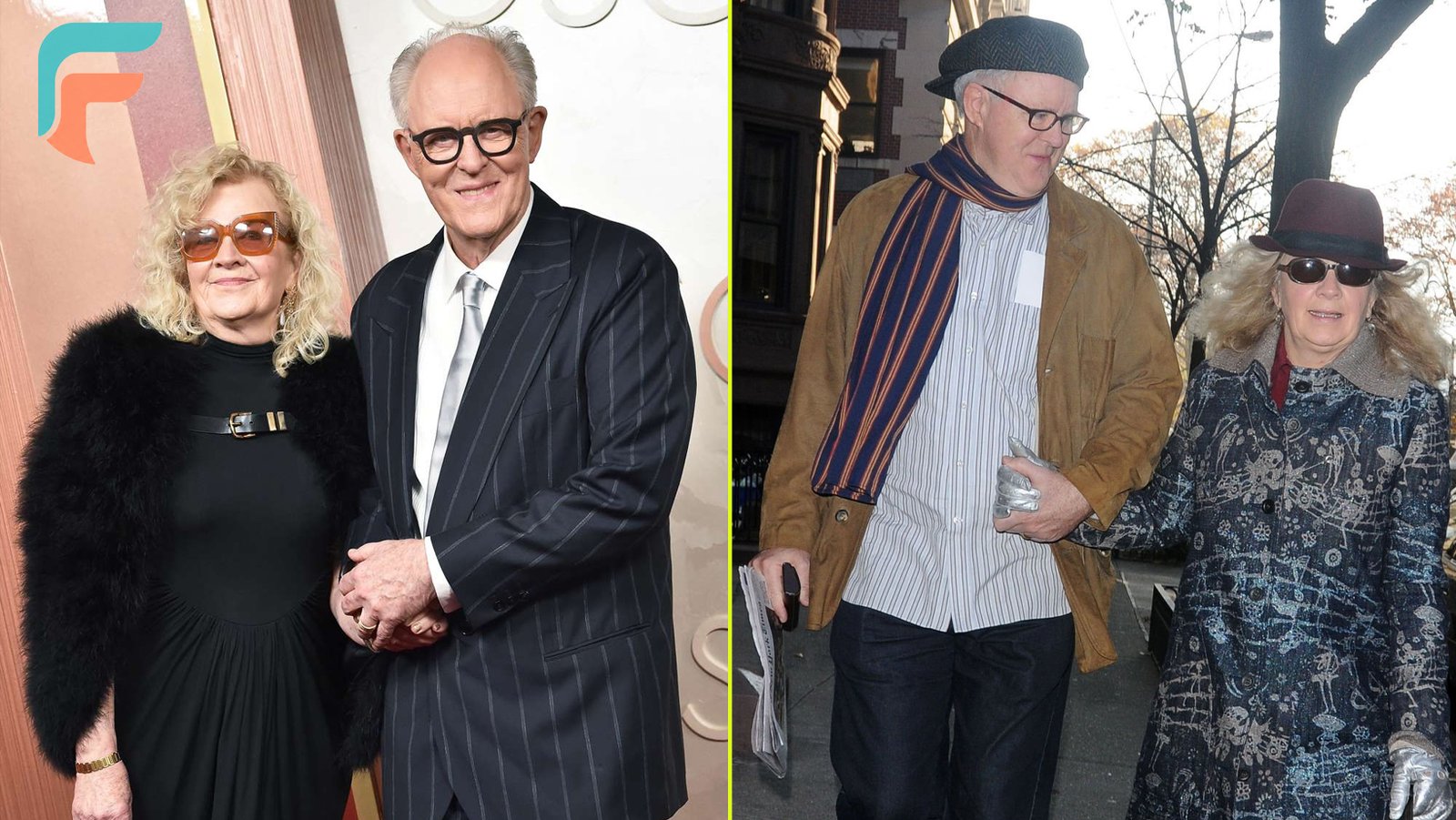
Jean Taynton is a name that surfaces again and again in searches about actor John Lithgow, yet almost nothing about her comes from her own words. She was a schoolteacher from the northeastern United States who married a young, struggling actor in 1966, supported him financially while his career slowly took shape, raised a son with him, and then watched the marriage end in 1980 after his highly publicized affair with actress Liv Ullmann. Since the divorce, Taynton has stayed almost entirely out of public view, which is exactly why curiosity about her keeps resurfacing whenever John Lithgow appears in the news, wins an award, or talks about his early years in a new interview. This article pulls together what is actually known about Jean Taynton, separates confirmed facts from things that are only reported secondhand, and explains why her story continues to matter to people who follow Lithgow’s long and varied career.
Quick Bio Table
| Detail | Information |
|---|---|
| Full name | Jean Taynton |
| Known for | First wife of actor John Lithgow |
| Occupation | Teacher, specializing in reading instruction |
| Estimated birth year | Reportedly around 1939 to 1941 (unconfirmed) |
| Nationality | American |
| Education | Reportedly Oberlin College (unconfirmed) |
| Met John Lithgow | Mid 1960s, at a summer theater in Massachusetts |
| Married John Lithgow | 1966 |
| Children | One son, Ian Lithgow, born 1972 |
| Divorced | 1980 |
| Reason cited for divorce | John Lithgow’s affair with actress Liv Ullmann |
| Current status | Lives privately, no public career or media presence |
| Public appearances | None documented in recent years |
Early Life and Education
Solid, independently verified information about Jean Taynton’s childhood is limited, which is common for private individuals who never sought public attention and only became a topic of interest because of a later marriage. What is consistently reported across biographical write ups about John Lithgow is that Taynton grew up in the United States and pursued a career in education from a young age. Several sources state that she attended Oberlin College in Ohio, a school long known for its strong liberal arts and music programs, although this detail has not been confirmed through a primary record and should be treated as a reported fact rather than an established one.
What can be said with more confidence, because it lines up with Lithgow’s own public statements about his early life, is that Taynton trained and worked as a teacher who focused on reading instruction. Multiple accounts describe her later work helping children who struggled with dyslexia, and some mention a period working with an organization connected to reading support for visually impaired or learning disabled students. Teaching was not a side interest for her. It became the steady income that anchored the household during the years when her husband’s acting career offered no financial security at all.
This grounding in education matters for understanding the rest of her story. Long before John Lithgow became a recognizable face on stage, television, and in film, Jean Taynton was the one with a functioning career and a paycheck, and that dynamic shaped much of their marriage.
How Jean Taynton Met John Lithgow
According to accounts drawn from Lithgow’s own recollections of his early life, he and Jean Taynton met in the mid 1960s at a summer theater on Cape Cod in Massachusetts, a common training ground for young actors at the time. Reports describe the two of them being cast together in a production of the comic opera Patience, with Taynton taking a leading female role and Lithgow playing opposite her. Summer stock theaters like this one were known for bringing together aspiring performers, students, and local teachers who acted for fun during the off season, and it was in that setting that the pair reportedly grew close.
Their connection developed quickly. Lithgow was still a teenager at the time, having graduated from Harvard College, and Taynton was slightly older with an established career already underway. The relationship moved from the stage into a real courtship, and within a relatively short time the couple decided to marry.
Marriage to John Lithgow
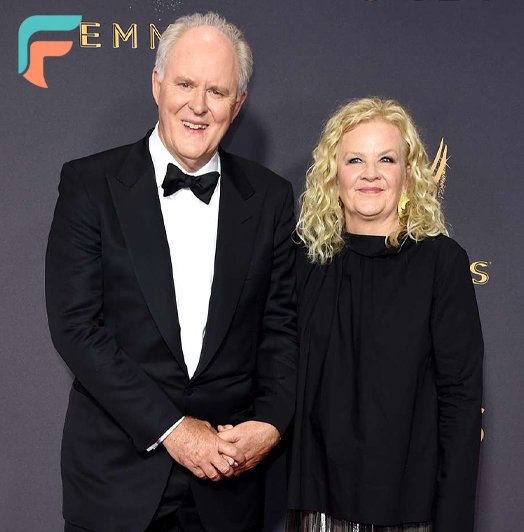
Jean Taynton and John Lithgow married in 1966. He was only nineteen years old at the time, a detail he has referenced publicly when discussing how young and financially unprepared he was for both marriage and fatherhood. Some accounts place the wedding at a church ceremony in Philadelphia with a modest guest list, though the exact venue and size of the ceremony come from secondary sources rather than an official record.
The early years of the marriage were defined by financial instability, which is a familiar story for couples where one partner is chasing a career in the arts. Lithgow pursued training and small acting jobs, including a period studying drama in London, while Taynton worked as the primary breadwinner. This arrangement is one of the more consistently repeated details across accounts of the marriage, and it fits the broader, well documented arc of Lithgow’s career, since he did not achieve real financial and professional stability as an actor until years later.
The couple faced a painful loss early in the marriage when their first child was born prematurely and did not survive. They went on to have a son, Ian Lithgow, born in February 1972. Ian later became both an actor, following in his father’s footsteps with credits in television, and a licensed marriage and family therapist, having earned a graduate degree from Harvard. The blend of performance and psychology in his career is sometimes noted by fans as an interesting echo of his parents’ different worlds, one in theater and one in education and caregiving.
As Lithgow’s acting opportunities expanded through the 1970s, the balance of the marriage shifted. He began working more, traveling for roles, and building the reputation that would eventually make him one of the more respected character actors of his generation. That growing career, ironically, is often cited as the beginning of the strain that eventually ended the marriage.
The Divorce and the Liv Ullmann Affair
The most widely reported and independently confirmed detail about the end of Jean Taynton’s marriage is that John Lithgow had an affair with the acclaimed Norwegian actress Liv Ullmann while the two were working together on a Broadway production. This detail appears not only in entertainment biographies but has also been referenced by Lithgow himself in interviews and in his own memoir about his early acting career.
The affair effectively ended the marriage. Several accounts describe Lithgow confessing the relationship to Taynton directly, with some reports specifying that the conversation took place while he was on tour, though the precise location and circumstances of that conversation vary slightly between sources and should be read as reported detail rather than confirmed fact. What is not in dispute is the outcome: John Lithgow and Jean Taynton divorced in 1980, after roughly fourteen years of marriage.
Following the divorce, Lithgow went on to marry Mary Yeager, a history professor at UCLA, with whom he has two more children. That second marriage has lasted for decades and is the one most closely associated with Lithgow’s public family life today. Jean Taynton, by contrast, has never been reported as remarrying, and no public record indicates a second marriage or a new public partnership.
Jean Taynton’s Life After the Spotlight
Once the marriage ended, Jean Taynton effectively disappeared from public discussion for decades. She did not pursue any career connected to entertainment, did not give interviews about her marriage, and has not appeared in public alongside her famous ex husband or her son in any documented capacity. This is a notable contrast to many former spouses of celebrities who go on to write memoirs, appear on talk shows, or otherwise capitalize on their connection to a well known figure.
Reports suggest she continued working in education for years after the divorce, possibly in the Westchester County area of New York, though this detail again comes from secondary sources rather than confirmed public records. There is no verified information about where she currently lives, whether she is still working, or what her day to day life looks like. Given that she would be in her mid eighties or older as of 2026 based on estimated birth years, it is reasonable to assume she has been retired for some time, but this is speculation rather than confirmed fact.
Her decision to stay private appears to be a deliberate one rather than an accident of circumstance. Unlike many people connected to celebrities who eventually engage with media attention in some form, Taynton has maintained that privacy consistently for more than four decades since the divorce became public knowledge.
Her Son, Ian Lithgow, and the Family Connection
Jean Taynton’s most enduring public connection, beyond her marriage to John Lithgow, is through their son Ian Lithgow. Ian has built his own career as an actor, appearing in television roles over the years, while also working as a licensed therapist specializing in marriage and family counseling. He has spoken publicly about his father’s career and his own path into acting, though he has said comparatively little about his mother in interviews, which is consistent with her general preference for privacy.
The fact that Ian pursued both performance and therapeutic work is sometimes framed by fans and entertainment writers as a reflection of both parents, combining his father’s theatrical world with the more grounded, service oriented profession his mother built her own life around. There is no confirmed public statement from Ian describing the split this cleanly, so this interpretation should be understood as an observation rather than something either parent or child has stated directly.
Why People Search for Jean Taynton Today
Interest in Jean Taynton tends to spike whenever John Lithgow is in the news, whether that means a new film role, an award nomination, or a retrospective interview about his long career. Because Lithgow has spoken openly in his own memoir and in interviews about his difficult first marriage, its collapse, and the affair that ended it, curious readers naturally want to know more about the woman on the other side of that story.
Part of the appeal is also the contrast she represents. In an era where former partners of celebrities frequently become public figures in their own right through social media, reality television, or tell all books, Jean Taynton represents the opposite path. She has never sold her story, never commented publicly on the divorce, and never used her connection to a famous actor to build any kind of public profile. That restraint, in an entertainment culture that usually rewards the opposite behavior, is itself part of why people remain curious about her.
Search interest in her name also reflects a broader pattern in how audiences engage with celebrity biographies. Fans often want the fuller picture behind a public figure’s life story, including the people who shaped them before fame arrived. Jean Taynton was present during the least glamorous, most financially uncertain years of John Lithgow’s career, long before he became known for his work in film, television, and theater, and that formative period makes her part of the larger story even though she chose not to remain part of the public one.
Conclusion
Jean Taynton’s place in public memory rests almost entirely on one chapter of her life: her marriage to a struggling young actor named John Lithgow, a marriage that lasted fourteen years, produced a son, and ended after a well documented affair with actress Liv Ullmann. Beyond that chapter, she chose privacy, and she has kept that choice consistently for more than four decades. The confirmed facts about her, drawn from Lithgow’s own public statements and memoir, describe a hardworking teacher who supported her family during hard financial years and then quietly stepped out of the spotlight once the marriage ended. Many of the finer details often repeated online, from the exact college she attended to the precise circumstances of her divorce conversation with Lithgow, remain reported rather than officially confirmed, and readers should treat them accordingly. What remains clear is that Jean Taynton played a real and important role in the early life of a celebrated actor, even though she never sought recognition for it herself.
Frequently Asked Questions
Who is Jean Taynton? Jean Taynton is best known as the first wife of actor John Lithgow. She was a schoolteacher who married Lithgow in 1966, and the two divorced in 1980 after he had an affair with actress Liv Ullmann.
Did Jean Taynton have children with John Lithgow? Yes. The couple had one surviving child, a son named Ian Lithgow, born in 1972. They reportedly lost a first child shortly after a premature birth earlier in the marriage.
Why did Jean Taynton and John Lithgow divorce? The marriage ended in 1980 after John Lithgow had an affair with actress Liv Ullmann while the two were working together on a Broadway production. Lithgow has discussed this period of his life publicly in interviews and in his memoir.
What does Jean Taynton do now? There is no confirmed public information about Jean Taynton’s current life, career, or location. She has remained almost entirely out of the public eye since her divorce from John Lithgow in 1980.
Is Jean Taynton related to Ian Lithgow? Yes, Jean Taynton is the mother of actor and therapist Ian Lithgow, whom she had with John Lithgow during their marriage.