
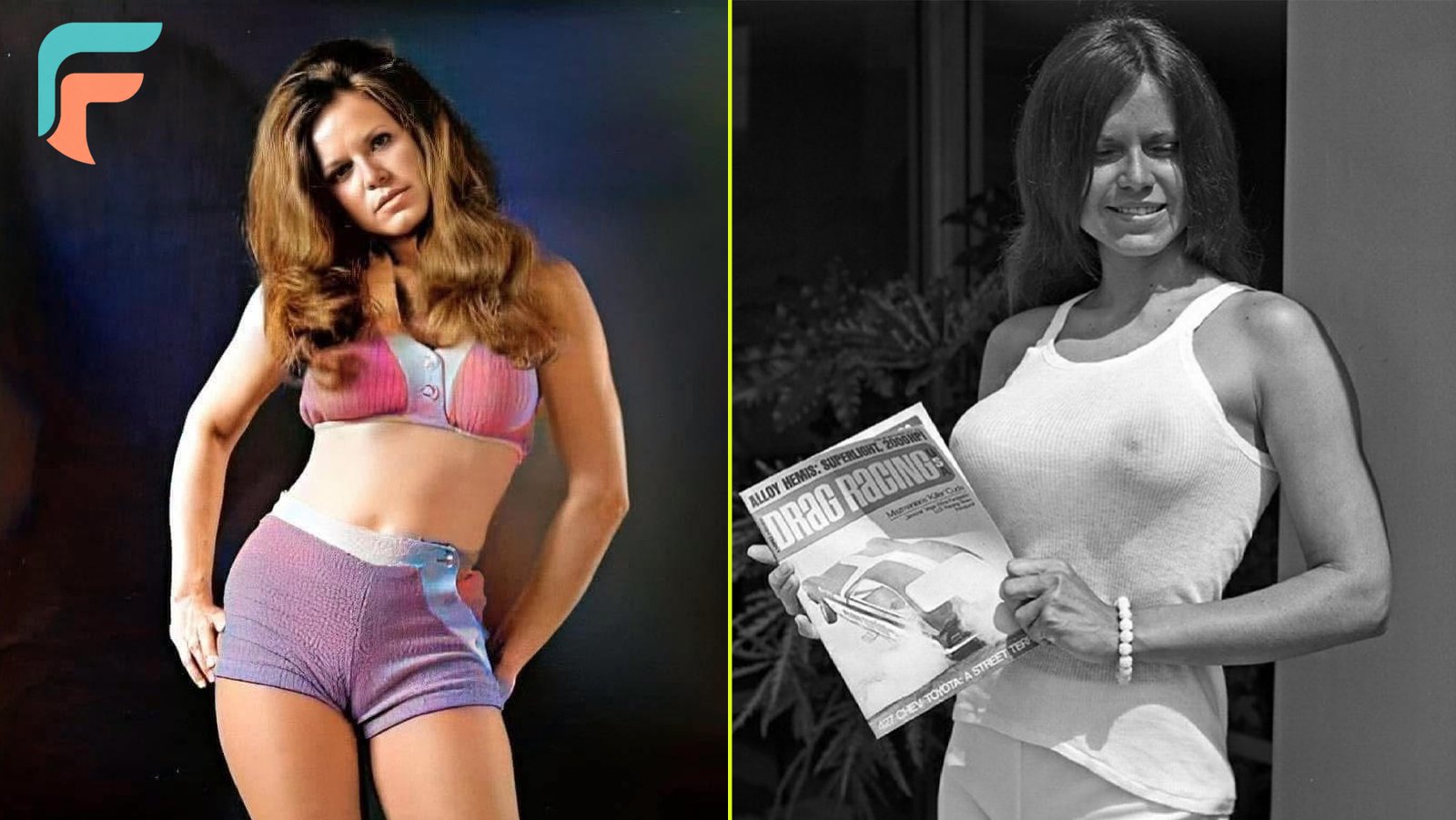
Barbara Roufs spent the early 1970s as one of the most photographed faces on the American drag racing circuit, a trophy girl and promotional model whose bell bottoms, aviator sunglasses, and easy confidence at tracks like Orange County International Raceway made her a familiar sight to fans of the era. She was largely forgotten outside hardcore motorsports circles for decades, until vintage photographs of her resurfaced online in the mid-2010s and introduced her to an entirely new audience that had never heard of drag racing’s “trophy girl” tradition. That resurgence turned her into an unlikely internet icon long after her career ended, and it also reintroduced the sad fact that she died young, reportedly by suicide, a detail that adds a layer of poignancy to every photo now shared in her name. This article pulls together what can actually be verified about her life, separates it from the speculation that has spread across low quality biography sites, and explains why she still shows up in search results today.
Quick Bio Table
| Category | Details |
|---|---|
| Full name | Barbara Jean Roufs (born Barbara Jean Brown) |
| Also known as | Barbara Roufs, “the OCIR trophy girl” |
| Born | July 22, 1943 (per genealogical records) |
| Birthplace | Clovis, Fresno County, California |
| Died | Reportedly January 1991 (some online sources are inconsistent on the exact year) |
| Age at death | 47 |
| Reported cause of death | Suicide (widely reported but not independently confirmed by contemporary news coverage) |
| Occupation | Drag racing trophy girl, promotional and event model |
| Known for | Trackside photographs at Orange County International Raceway and other 1970s drag strips; viral resurgence of her photos decades later |
| Years active | Late 1960s through the 1970s |
| Associated organization | Professional Dragster Association (PDA), according to several secondary sources |
| Spouse | Donald Arthur Roufs (married 1961, divorced 1971, per genealogical records) |
| Children | Reportedly one daughter (specific details are not consistently confirmed across sources) |
| Nationality | American |
Early Life and Family Background
Reliable, independently verifiable information about Barbara Roufs’ childhood is thin, which is common for people who became famous through a niche subculture rather than mainstream entertainment. Genealogical and memorial records indicate she was born Barbara Jean Brown on July 22, 1943, in Clovis, a small city in Fresno County in California’s Central Valley. Her father’s surname was Brown, and her mother later appears under the surname Riley, which suggests a remarriage at some point during Barbara’s early years. She had at least one sister, Vivian, and a half brother named James, according to family history records tied to her name.
At age eighteen, she married Donald Arthur Roufs, the man whose surname she carried for the rest of her life and the one under which she became known to drag racing fans. Genealogical records list the marriage as beginning in 1961 and ending in divorce in 1971, with a daughter born during that decade. Beyond these basic facts, very little about her upbringing, education, or life before racing has been documented in any source that can be considered a primary record. Readers should treat more elaborate claims about her childhood, personality, or family life that circulate on some biography websites with real skepticism, since many of these sites repeat identical, oddly specific details (down to net worth figures and relatives’ names) without citing any original source, a pattern typical of content written to fill out a page rather than to report verified facts.
Her Career in 1970s Drag Racing Culture
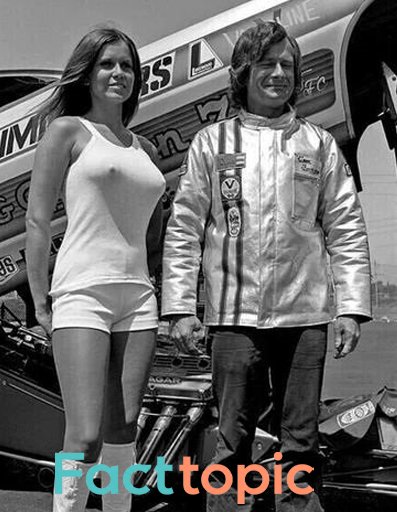
The role Barbara Roufs is remembered for, the “trophy girl,” was a fixture of American drag racing from the sport’s postwar boom through the 1970s and beyond. Trophy girls appeared at the starting line and in the winner’s circle at drag strips across the country, posing with cars, presenting trophies to winning drivers, and serving as a visible, glamorous face for tracks and sponsors trying to draw crowds. It was part beauty pageant, part public relations job, and part motorsports tradition, and it made the women who held the role recognizable regulars at their home tracks even though most never sought fame beyond the strip itself.
Roufs worked this circuit primarily in Southern California during the early to mid 1970s, and she became closely associated with Orange County International Raceway, commonly known as OCIR, one of the most important drag strips of that era. Several sources describe her as having been recognized in connection with the Professional Dragster Association, a sanctioning and promotional group tied to the funny car and professional dragster scene of the period, and some accounts specifically place her as a featured queen at a U.S. Professional Dragster Championship event at OCIR in 1973. These details appear consistently enough across enthusiast sources and vintage photo archives that they are reasonably credible, though no single authoritative record confirms every specific title or date attached to her name.

What is much better documented is her presence in the photographic record of the sport. Barbara Roufs was extensively photographed by the drag racing photojournalists who covered tracks like OCIR, Lions Drag Strip, and other Southern California venues during the era. Chief among them was Steve Reyes, a photographer whose decades of drag racing images earned him induction into the International Drag Racing Hall of Fame, one of a small handful of photographers ever to receive that honor. Reyes and his contemporaries shot thousands of frames of cars, drivers, and trackside personalities for outlets like Drag Racing USA and various hot rod magazines, and original prints and negatives identifying Roufs by name as an “OCIR PDA Queen” still circulate today among motorsports photography collectors. That body of work is the most reliable evidence of who she was and what she actually did during her years on the circuit.
Her look, long hair, go-go boots, halter tops, denim, and the loose, sun-drenched California style of the period, has since become shorthand for an entire aesthetic that vintage car culture fans associate with the golden age of drag racing. She was not a race car driver and did not compete, but she was a working part of the sport’s promotional machinery at a time when drag racing was fighting for mainstream attention and relied heavily on personality and spectacle to fill grandstands.
How Barbara Roufs Became an Internet Icon Decades Later
For roughly forty years after her time on the circuit ended, Barbara Roufs remained known only within the relatively small world of vintage drag racing enthusiasts, the kind of people who collect old event programs, trade original photographer prints, and populate niche forums dedicated to 1960s and 1970s American car culture. That changed gradually starting in the 2010s, as high quality scans of vintage drag racing photography began circulating widely on image-driven platforms.
Photo blogs on Tumblr devoted to hot rods and pin-up style nostalgia, Reddit communities built around retro Americana and vintage photography, and later Instagram and Facebook pages dedicated to drag racing history all began sharing the same striking images: a confident young woman in period fashion, draped over the hood of a dragster or striking a pose in front of a starting line packed with fans. Several of these photographs came from Steve Reyes’ archive and other photographers who had covered OCIR in the early 1970s, and they were compelling enough on their own that they spread with minimal context, often without her name attached at all at first.
As the images kept resurfacing, curious viewers began asking who she was, and the answer, once tracked down through old racing programs and photographer credits, turned a striking but anonymous photo into a named figure with a real story. That combination, an arresting vintage image paired with a genuine identity and a sad ending, is exactly the kind of content that performs well on social platforms, and it is largely what pushed Barbara Roufs from a regional drag strip personality into a recurring subject of “whatever happened to this photo” style posts and articles years after her death. Her renewed popularity says more about how nostalgia and algorithm driven platforms surface forgotten figures than it does about anything she did to court attention in her own lifetime.
Her Death
The part of Barbara Roufs’ story that receives the most attention online, and the part that is hardest to verify with confidence, is how her life ended. The consistent thread across genealogical records and the more careful secondary sources is that she died in January 1991 in Fresno, California, at the age of 47, and that her death is reported to have been a suicide. Some of the biography sites that repeat her story online use different or vague years and offer no sourcing at all for the cause of death, which makes it important to treat the details with caution rather than certainty.
No contemporary newspaper obituary or official record detailing the circumstances of her death has surfaced publicly, and nothing in the available record explains what led to it. Family members are occasionally cited in secondary articles as having acknowledged the suicide years later, but those accounts are not independently corroborated, and several of the biographical details attached to them, including the name and age of a surviving daughter, conflict with genealogical records tied to her name. Given that inconsistency, this article treats the suicide itself as a reported fact that appears across multiple secondary sources, while treating the specific narrative details built around it as unconfirmed. Readers should approach this part of her story with the same sensitivity they would want extended to anyone’s mental health struggles, resisting the urge to sensationalize a tragedy simply because the person involved has since become a viral photograph.
Why People Still Search for Barbara Roufs Today
The interest in Barbara Roufs today comes from several overlapping directions. Vintage car and drag racing enthusiasts search for her because she is a genuine piece of the sport’s visual history, a real person tied to a specific track and a specific competitive series rather than a generic stock image. Fans of retro fashion and pin-up style Americana search for her because her look has become a recognizable reference point for the aesthetic of that period. General internet users search for her the way they search for many rediscovered vintage photographs, drawn in by a striking image and curious about the real person behind it once they learn she has a name and a documented history.
Her death adds another layer to that curiosity. Stories about people who found unexpected fame only after their death, especially when that fame arrived through a medium (the internet) that did not exist during their lifetime, tend to generate lasting interest because they raise obvious, unanswerable questions about what she might have thought of her own belated popularity. That combination of visual nostalgia, motorsports history, and quiet tragedy is why Barbara Roufs continues to surface in search results years after the photographs of her first went viral, even though comprehensive, verified information about her life remains genuinely limited.
Conclusion
Barbara Roufs was a real, working part of American drag racing’s promotional culture in the early 1970s, photographed at tracks like Orange County International Raceway by respected motorsports photographers whose work has outlasted the era it documented. She was not a celebrity in her own time and never sought the fame that eventually found her decades after her career ended, when her photographs began circulating on social media and introduced her to a generation of viewers who had never heard of drag strip trophy girls. She reportedly died by suicide in January 1991 at the age of 47, a detail that gives her viral fame a somber undertone that is easy to overlook when scrolling past another eye catching vintage photo. The honest version of her story sits between two extremes: she was neither a fabricated internet character nor a fully documented public figure, but a real woman whose brief, well photographed career on the drag strip circuit left behind more images than facts, and whose story deserves to be told with the caution that gap requires.
Frequently Asked Questions
Who was Barbara Roufs? Barbara Roufs was an American drag racing trophy girl and promotional model active in the early to mid 1970s, best known for her appearances at Orange County International Raceway and her association with the Professional Dragster Association circuit.
Why did Barbara Roufs become famous on the internet? Vintage photographs of her from the 1970s, taken by drag racing photographers like Steve Reyes, began recirculating on social media and vintage car culture blogs in the mid-2010s, introducing her striking look and the drag strip trophy girl tradition to a new online audience.
Did Barbara Roufs die in 1978? No reliable record supports a 1978 death date. Genealogical records and the more carefully sourced biographical accounts consistently point to January 1991, when she reportedly died at age 47, so any claim of a 1978 death appears to be a mistaken or unverified detail circulating online.
How did Barbara Roufs die? She reportedly died by suicide, according to multiple secondary sources, though no contemporary news report or official record detailing the circumstances has surfaced publicly, so the specific details surrounding her death remain unconfirmed.
Is there a lot of verified information about Barbara Roufs’ personal life? Not really. Verified details are limited mostly to basic genealogical facts such as her birth year, marriage, and death record, and readers should be cautious of biography sites that present highly specific personal details, such as exact net worth figures or named relatives, without citing any original source.