

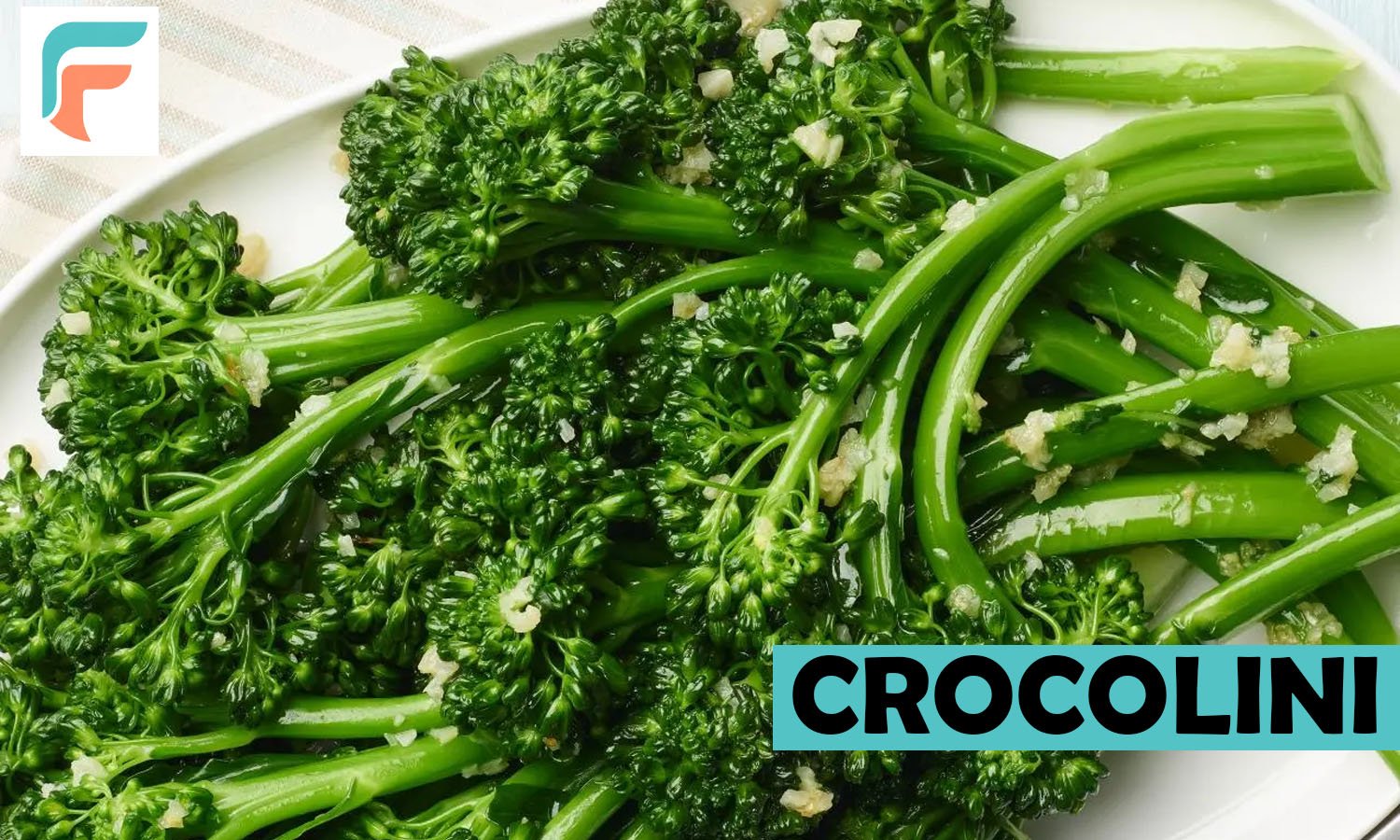
Crocolini is the name many people use online for a tender green vegetable with long, thin stems and small florets. It looks like a slim cousin of broccoli, and it cooks in just a few minutes. If you have seen the word in a recipe, a store, or a search result and wondered what it means, you are not alone. The name is new to many cooks, and the facts online do not always agree. In this guide, you will learn what crocolini really is, where it comes from, how it tastes, what is inside it, and how to cook it well. Everything here is written in plain words, so you can start cooking with confidence.
What is crocolini?
Crocolini is a name used for a slim, green, broccoli-style vegetable with soft stems and small, loose florets. You will mostly see the word on blogs and in search results. It is rarely printed on a store label.
The vegetable people describe with this name has a few clear features:
- Long, thin stems, a little like asparagus
- Small florets at the top
- Small, soft leaves along the stem
- A mild, slightly sweet taste
You can eat almost all of it. You do not need to peel the stems, and you only need to cut off the dry ends. That makes it a good choice when you want a green side dish fast.
One more thing is worth saying. A few websites use “crocolini” for other things, such as a fried snack or even a pet. Those uses are rare and not well supported. In this article, crocolini means the green vegetable, because that is what most people are searching for.
Is crocolini the same as broccolini?
In almost every case, crocolini points to broccolini, or to a very similar baby-broccoli type of vegetable. The two words look and sound alike, and the descriptions online match. People describe the same long stems, the same small florets, and the same mild taste.
Here is the honest part. “Broccolini” is a well-known name with clear records behind it. “Crocolini” is not an official crop name that you can find in seed catalogs or plant records. Some small sites say crocolini is its own new vegetable, but they give different stories about its parents. One says it is a cross of broccoli and kale. Another says broccoli and Chinese broccoli. These stories do not match, which is a warning sign.
So the safest way to think about it is this: crocolini is most likely a spelling or nickname for broccolini. If you shop for broccolini, or for “baby broccoli” or “tenderstem broccoli,” you will find what people usually mean when they say crocolini.
Where does crocolini come from?
The vegetable behind the name was created in Japan in the early 1990s. A seed company called Sakata Seed developed it by crossing regular broccoli with gai lan. Gai lan is also called Chinese broccoli or Chinese kale.
According to a Sakata patent document, this baby broccoli was first developed in 1993. It is sold under several trade names, including Broccolini, Aspabroc, and Tenderstem. The name “Aspabroc” comes from the idea that the stems look like asparagus, while the plant is still a type of broccoli.
Some food writers say the breeding work started earlier, in the 1980s, and that the plant was first called “Aspirations” in Japan. The exact start date is not clear, but all the sources agree on the main point. The vegetable is only a few decades old, and it was bred in Japan.
You may worry that a hybrid is the same as a genetically modified food. It is not. This vegetable was made with normal plant breeding. Breeders moved pollen between two related plants by hand and then picked the best offspring over many years. All of these plants belong to the same species, Brassica oleracea, so they cross naturally.
How is crocolini different from broccoli?
Crocolini has thinner stems, smaller florets, and a sweeter taste than regular broccoli. It also cooks faster. Here is a simple way to compare them.
| Feature | Broccoli | Crocolini (broccolini) |
|---|---|---|
| Stem | Thick and sometimes tough | Thin and tender |
| Floret | Large and tight | Small and loose |
| Taste | Earthy, a little bitter | Mild and slightly sweet |
| Prep | Cut into pieces, peel big stems | Trim the ends only |
| Cooking time | Longer | A few minutes |
| Price | Lower | Usually higher |
The price is a good thing to know before you shop. Crocolini costs more because you get less food from each bunch, and because it is a newer crop. If you want to save money, regular broccoli is a good swap in most recipes.
Another common mix-up is with rapini, also called broccoli rabe. Rapini looks a little similar, but it is a different plant, Brassica rapa, and it tastes much more bitter. Do not expect the same flavor.
What does crocolini taste like?
Crocolini tastes mild, fresh, and a little sweet, with a gentle green flavor. Many cooks say it reminds them of asparagus mixed with broccoli. It has far less bitterness than broccoli or kale.
The texture changes with the way you cook it. Steamed crocolini is soft with a little snap. Roasted crocolini has crispy tips and a nutty, browned flavor. The small leaves on the stem turn crunchy in the oven, and many people like them best.
Because the taste is mild, it works well for people who do not enjoy strong greens. It is also a nice choice for children who are fussy about vegetables.
Is crocolini healthy?
Yes, crocolini is a healthy vegetable. It is low in calories and gives you fiber, vitamins, and minerals. Like other vegetables in its family, it is a good source of vitamin C and vitamin K.
Exact numbers for crocolini are hard to find, because the name is not used in official food databases. Broccolini has some data, but the sources do not match each other. One nutrition site lists about 29 calories in 100 grams of broccolini. Other sites give different vitamin numbers. Because of this, it helps to look at regular broccoli, which has been tested carefully by the U.S. Department of Agriculture (USDA).
According to USDA data, 100 grams of raw broccoli has about 34 calories, about 89 mg of vitamin C, and about 102 micrograms of vitamin K. That is close to a full day of vitamin C and most of the vitamin K you need. Since crocolini is made from broccoli and gai lan, you can expect a similar mix of nutrients. Treat these numbers as a guide, not an exact label.
Here is why those nutrients matter:
- Vitamin C helps your body make collagen and supports your immune system.
- Vitamin K helps your blood clot and supports strong bones.
- Fiber helps your digestion and keeps you full.
- Folate and potassium support your cells and your heart.
Green vegetables in this family also have natural plant compounds that scientists are still studying. These findings are interesting, but no single vegetable can protect you from disease on its own. A varied diet matters more.
Who should be careful with crocolini?
Most people can eat crocolini without any problem. The main group that needs care is people who take blood-thinning medicine such as warfarin.
Vitamin K can change how this medicine works. Medical News Today advises people on these drugs not to suddenly eat a lot more vitamin K-rich food, such as broccoli. This does not mean you must avoid it. It means you should keep your portions steady from week to week and talk to your doctor or pharmacist if you plan to change your diet.
Some people also find that cabbage-family vegetables cause gas or bloating, especially when eaten raw. If this happens to you, try cooking the vegetable well and eating smaller portions.
How do you choose and store crocolini?
Look for bunches with bright green stems and tight, dark green florets. The ends should look fresh, not dry or split. Avoid bunches with yellow flowers, limp stems, or slimy spots, because these are signs of age.
At home, keep it unwashed in the fridge. One cooking guide suggests a perforated plastic bag in the crisper drawer, which lets air move around the stems. Wash it just before you cook it. Fresh crocolini is best within a few days.
You can also store cooked crocolini. Most recipe writers say cooked broccolini keeps for three to four days in an airtight container in the fridge. Let it cool first, because warm food in a closed box makes steam and spoils faster.
If you want to freeze it, blanch it first. Steam it for about two minutes, then cool it in ice water. Without this step, the color and texture get worse in the freezer.
How do you cook crocolini?
You can cook crocolini by roasting, steaming, or sautéing, and each method takes only a few minutes. Start by rinsing it and trimming about an inch off the bottom of the stems. If a stem is very thick, cut it in half lengthwise so it cooks evenly.
Roasting
Roasting gives the best flavor and crispy edges.
- Heat your oven to 425°F (220°C).
- Toss the crocolini with olive oil, salt, and pepper. Use enough oil to coat every piece, because the small florets burn easily.
- Spread it in one layer on a baking sheet. Do not crowd the pan, or it will steam and turn soft.
- Roast for 10 to 15 minutes. Turn the pan halfway through.
Add lemon juice or grated Parmesan at the end for extra flavor.
Steaming
Steaming keeps the color bright and the taste fresh.
- Put an inch of water in a pot and bring it to a boil.
- Place the crocolini in a steamer basket over the water and cover the pot.
- Steam for about 4 to 6 minutes, until it is bright green and just tender.
- Move it out of the pot right away so it does not get mushy. A short dip in ice water keeps the color.
Sautéing
Sautéing is the fastest way to a hot side dish.
- Heat a little oil in a wide pan over medium-high heat.
- Add the crocolini and cook for 4 to 6 minutes, turning often.
- Add sliced garlic in the last minute so it does not burn.
- Finish with salt, pepper, and a squeeze of lemon.
One tip applies to every method: do not overcook it. One recipe writer says it can go from perfect to soft in about half a minute. Taste a stem as soon as the color turns bright green.
What can you serve with crocolini?
Crocolini goes well with almost any main dish. Its mild taste does not fight with other flavors. Here are some easy ideas:
- Serve roasted crocolini next to chicken, fish, or steak.
- Toss steamed crocolini with garlic, olive oil, and chili flakes, then mix it into pasta.
- Add it to a stir-fry with soy sauce and ginger.
- Chop it into an omelet or a breakfast scramble.
- Serve it cold in a grain bowl or salad with a tahini dressing.
If you cannot find it, you have good substitutes. Regular broccoli, gai lan, asparagus, and green beans all work in most recipes. Cut broccoli into small pieces so it cooks in the same time.
Conclusion
Crocolini is a simple, mild green vegetable that is easy to love. It looks like a slim version of broccoli, and in most cases the name points to broccolini, a Japanese-bred cross of broccoli and gai lan. The name itself is not an official crop name, so be careful with websites that tell big stories about it. You can still buy, cook, and enjoy the vegetable with confidence. Roast it for crispy edges, steam it for a fresh taste, or sauté it with garlic when you are in a hurry. Keep the cooking time short, and it will taste great every time.
Frequently asked questions
1. What is crocolini?
Crocolini is a name used online for a tender green vegetable with long, thin stems and small florets. It tastes mild and a little sweet. In most cases, it refers to broccolini, a cross between broccoli and Chinese broccoli. You can cook and eat nearly the whole plant, including the stems and leaves.
2. Is crocolini the same as broccoli?
No. Crocolini is not the same as regular broccoli, but they are close relatives. Broccoli has a thick stem and large, tight florets. Crocolini has thin stems, smaller florets, and a sweeter taste. It also cooks faster, so it is a good choice when you need a quick side dish.
3. Is crocolini a real vegetable?
The vegetable is real, but the name is not official. Crocolini is most likely another way to say broccolini. Broccolini has clear records, including patent documents from the company that developed it. Some websites describe crocolini as a separate new crop, but they give different facts, so be careful with those claims.
4. Where does crocolini come from?
The vegetable behind the name was bred in Japan by the Sakata Seed company in the early 1990s. Breeders crossed regular broccoli with gai lan, also called Chinese broccoli. It was made by normal plant breeding, not by gene editing or genetic modification. Today it is grown and sold in many countries.
5. What does crocolini taste like?
Crocolini tastes mild, fresh, and slightly sweet. Many people say it is like a mix of asparagus and broccoli. It is less bitter than regular broccoli or kale. Roasting adds a nutty flavor and crispy tips, while steaming keeps the taste light and green.
6. Do you eat the stems of crocolini?
Yes, you can eat the stems, the florets, and the small leaves. The stems are thin and soft, so you do not need to peel them. Just trim about an inch off the bottom end. If a stem is thick, cut it in half the long way so it cooks evenly.
7. How long does it take to cook crocolini?
Crocolini cooks very fast. Steaming takes about 4 to 6 minutes, and sautéing takes about the same time. Roasting at 425°F (220°C) takes 10 to 15 minutes. Taste a stem early, because the vegetable can turn soft quickly if you leave it too long.
8. Is crocolini good for you?
Yes. Crocolini is low in calories and gives you fiber, vitamin C, and vitamin K. Exact numbers vary by source, but regular broccoli, its close relative, has about 34 calories per 100 grams, according to USDA data. It is best as part of a varied diet with many different vegetables.
9. Can I eat crocolini if I take blood thinners?
Often yes, but talk to your doctor first. Crocolini has vitamin K, which can affect blood-thinning medicine such as warfarin. The key is to eat a steady amount each week, not a sudden large amount. Your doctor or pharmacist can tell you what is right for your health.
10. How do I store crocolini?
Keep fresh crocolini unwashed in a perforated bag in the fridge crisper drawer, and wash it before cooking. Cooked crocolini lasts three to four days in an airtight container in the fridge. To freeze it, steam it for two minutes, cool it in ice water, and then pack it.