

You type “best sonso yuca near me” into Google, and you get a mix of recipes, food blogs, and pages about yuca fries. That can be confusing. Sonso is not a French fry. It is a soft, cheesy snack from Bolivia, and it is not always easy to find outside South America.
This guide will help you in three ways. First, you will learn what sonso de yuca really is. Second, you will get simple ideas for finding it near you. Third, you will see how to make a good version at home if you cannot find one. Everything here is written in easy English, and the facts come from food writers, travel guides, and food safety sources. They are listed at the end.
What Is Sonso de Yuca?
Sonso de yuca is a traditional dish from eastern Bolivia. It is made from mashed yuca (also called cassava or manioc) and cheese. One food writer described it as being like mashed potatoes, but made with yuca and mixed with cheese. People eat it for breakfast or as an afternoon snack, often with a hot drink like coffee, tea, or hot chocolate.
The dish comes mostly from the Santa Cruz and Beni regions of Bolivia. Yuca is one of the oldest and most common crops there. According to an Argentine food article, the dish grew out of the way local communities combined their main root crop with fresh cheese. Over time it became a favorite in homes, at breakfast tables, and at parties.
Sonso can be cooked in a few ways:
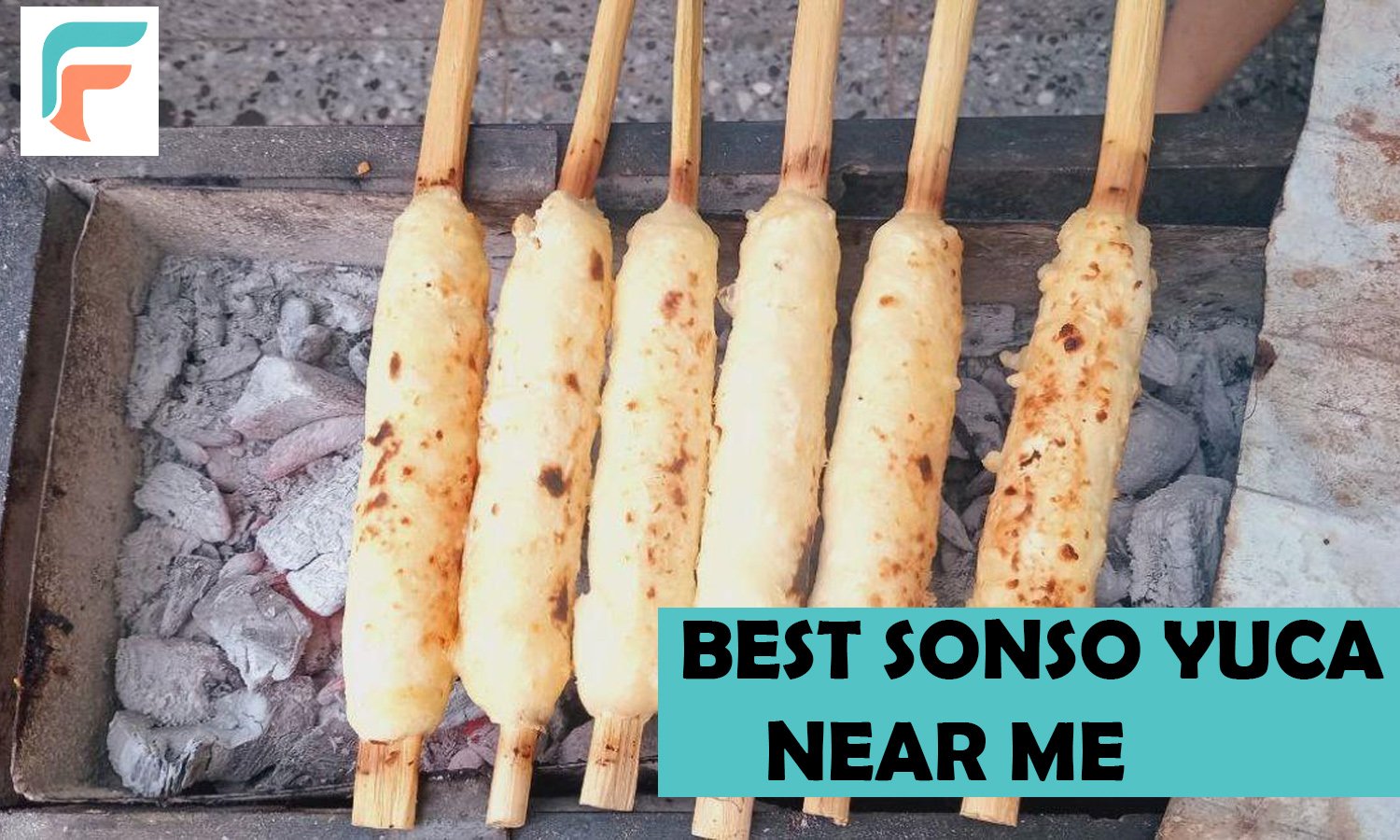
- Grilled on a skewer. This is the classic street style. The yuca and cheese mix is shaped around a big bamboo stick and cooked over charcoal. The outside gets a little crispy and smoky, and the inside stays soft and stretchy.
- Baked. The mix is spread in a pan and baked until the top is golden. This is the easiest way to make it at home.
- Fried. The mix is shaped into small patties and cooked in a pan until both sides are brown.
Travel writers at Lonely Planet describe sonso as a cheesy cassava bread that is often grilled on a large bamboo skewer over charcoal. They also say it is a good partner for tea time, together with another local snack called cuñapé.
Where does the name come from?
The word “sonso” is Spanish for “silly” or “dumb,” and one Bolivian food blogger notes this meaning on her recipe page. Another source says the name comes from the cane that people use as a skewer to roast the mix over hot coals. Food writers do not fully agree on this, so it is safest to say that the story behind the name is not clear. What everyone agrees on is that the dish is simple, cheap, and loved.
Sonso vs. Yuca Fries: Do Not Mix Them Up
Many pages online use the words “sonso yuca” when they really talk about yuca fries or fried yuca sticks. Those are different foods. Yuca fries are cut pieces of yuca, usually fried, and they are popular in many Latin American countries.
Sonso is different in these ways:
- The yuca is boiled and mashed first, not cut into sticks.
- Cheese is mixed right into the dough.
- It is soft and stretchy inside, not just crunchy.
- It is usually eaten as a snack or side dish with coffee or tea, not as a fast food side.
If a menu only says “yuca frita,” that is fried yuca, not sonso. Keep this in mind when you search, because it will save you time.
Can You Really Find Sonso Near You?
Here is the honest answer: it depends on where you live. Sonso is not a famous international dish like tacos or pizza. In most cities you will not find it at a regular restaurant. You have a better chance in places with a Bolivian community.
For example, a food guide from Washingtonian says the Washington, DC area is now home to dozens of Bolivian restaurants. The writers noted that one café in Falls Church, Virginia, was the only Camba-style place they had found in the area. Camba food comes from the eastern lowlands of Bolivia, where sonso is from. That café sold items like cuñapés, rice empanadas, and a rice dish called majadito. This shows that even in a city with many Bolivian restaurants, eastern-style snacks can be rare.
So do not expect to see “sonso” on every Bolivian menu. Many Bolivian restaurants focus on food from the mountain areas, which is heavy on meat and potatoes. Sonso belongs more to the east.
7 Simple Ways to Find the Best Sonso Near You
1. Search for the right words
Do not search only for “sonso.” Try different spellings and related words. People write it as sonso, zonzo, sonzo, or sonso de yuca. You can also search for:
- “Bolivian restaurant near me”
- “Camba restaurant” or “Santa Cruz Bolivian food”
- “cuñapé near me” (a place that sells cuñapé may also sell sonso)
- “Bolivian bakery”
2. Look at the menu photos and reviews
On Google Maps, open a Bolivian restaurant and check the photos that customers added. Search the review section for words like “sonso,” “yuca,” or “cheese yuca.” Real reviews from Bolivian customers are the best sign of a good, authentic place.
3. Call before you go
Sonso is often not written on the menu. It can be a daily special or something the cook makes only on certain days. A short phone call can save you a long trip. Ask: “Do you make sonso de yuca, and what days?”
4. Visit Latin markets and bakeries
Small bakeries and Latin food stores sometimes sell snacks like cuñapé, empanadas, and yuca-based items. Ask the staff if they know a cook who makes sonso. Often the answer is a family business or a weekend food stall.
5. Check community groups
Bolivian community groups on social media are very helpful. People share where to buy home-style food, weekend food sales, and church or cultural events. Search for “Bolivians in” plus your city name.
6. Watch for cultural events
Bolivian festivals, national holiday events, and food fairs often have street-style food. Sonso on a skewer is a good fit for these events.
7. Ask for it at a Paraguayan or Brazilian restaurant
Yuca and cheese breads are common across this part of South America. Lonely Planet notes that cheesy yuca breads in eastern Bolivia are sometimes called chipá, a name also used near the border with Paraguay. A kitchen that makes this kind of food may be able to help you or point you in the right direction.
How to Tell if Sonso Is Good Quality
Once you find a place, here is what to look for.
The yuca should be fresh. A recipe from the Argentine newspaper Crónica says to choose firm roots that are white inside and have no dark marks. Dry roots, dark lines, or a bad smell can spoil the final taste. Good sonso should taste clean and a little sweet, not sour or bitter.
The texture should be smooth. The cooks remove the hard fiber in the middle of the yuca before mashing it. If they skip this step, the sonso feels stringy. Good sonso is soft and even.
The cheese should be easy to taste. Bolivians usually add a lot of cheese. A Bolivian recipe writer says the amount of cheese depends on your taste, and that she likes pieces that are not fully melted, so they feel soft when you bite them. When you eat it, the cheese should stretch a little.
It should be served hot. Sonso is best right out of the oven, pan, or grill, when it is still soft and stretchy.
The outside should be golden. A light crust is a good sign. A pale, wet sonso may not have been cooked long enough.
What to Eat With Sonso
Sonso is rich and cheesy, so it goes well with fresh or spicy sides. Here are some popular ideas:
- A hot drink. Coffee, tea, or hot chocolate is the classic partner for an afternoon snack.
- A fresh salad. A simple salad of tomato, red onion, and mild chili adds a light, fresh taste.
- Llajua. This is a Bolivian hot sauce made with tomato and locoto pepper. It adds spice that matches the mild yuca and cheese.
- Grilled meat. One Bolivian cook serves sonso as a side dish with pork.
- A fried or scrambled egg. Some people serve it this way to make a bigger meal.
Make Sonso at Home: An Easy Baked Recipe
If you cannot find sonso nearby, you can make it yourself. Here is a simple baked version based on a recipe from the blog Chipa by the Dozen. It makes about six servings.
What you need
- 3 cups of mashed yuca (about 2 large roots)
- 2 cups of cheese, cut in small cubes (about 250 g)
- ½ cup of grated cheese for the top (about 50 g)
- ¼ cup of soft butter (about 56 g)
- ¼ cup of whole milk (about 59 ml)
- 1 teaspoon of salt, or to taste
The recipe writer says she uses mozzarella when she lives in the United States. You can also use other mild, melting cheeses. A different Bolivian recipe uses a semi-hard fresh cheese and adds two eggs to the mix. Both versions work, so choose what you can find.
Steps
- Prepare the yuca. Peel the yuca with a sharp knife and cut it into big pieces. Boil the pieces in salted water until they are very soft. This can take from about 15 to 50 minutes, depending on the yuca you buy. Some recipes say 25 to 30 minutes is enough.
- Remove the fiber. When the yuca is warm, take out the hard string in the middle of each piece.
- Mash it. Mash the yuca while it is still hot, because it is easier. You can use a fork, a potato masher, or a food processor. It should be smooth.
- Mix. Put the mashed yuca in a big bowl. Add the cheese cubes, butter, milk, and salt. Mix well.
- Bake. Heat the oven to 190 °C (375 °F). Grease a baking pan and spread the mix in it. Bake for 15 minutes.
- Add the top. Take the pan out, sprinkle the grated cheese on top, and bake for 5 more minutes, until the cheese is golden.
- Serve hot. Cut it into squares and serve right away.
Easy changes
- No oven? Shape the mix into small flat patties and cook them in a pan with a little butter or oil. Turn them until both sides are brown.
- Want a barbecue taste? Shape the mix around wet wooden sticks and turn them slowly over a grill.
- Want a party snack? Bake the mix in muffin tins to make small bites.
- Want some spice? One reader of the Chipa by the Dozen blog said they added pickled jalapeños, and the writer said it sounded like a great idea.
Important: Cook Yuca the Right Way
This part is very important. Raw yuca is not safe to eat. It contains natural substances that can release cyanide, which is a poison. Do not worry, though. When you prepare yuca in the normal way, it is safe.
The Centre for Food Safety in Hong Kong explains that sweet yuca roots contain less than 50 mg of hydrogen cyanide per kilogram, while bitter types can have up to 400 mg. Sweet yuca can generally be made safe by peeling it and cooking it very well. Medical News Today also says people should never eat yuca raw, that cooking and soaking make the harmful compounds harmless, and that you should peel it and throw away the cooking water.
Here are the safe steps to follow:
- Buy yuca from a store you trust.
- Peel off all the brown skin and the pink or purple layer under it.
- Cut it into smaller pieces.
- Boil it until it is very soft.
- Throw away the cooking water.
Store-bought frozen peeled yuca is also an option. These products are usually made with safety in mind, but you should still follow the instructions on the package. If you ever feel sick after eating yuca, or if you have a health problem, talk to a doctor.
How to Store and Reheat Sonso
Sonso is best fresh, but you can save leftovers. The Chipa by the Dozen writer says the raw sonso dough can be frozen for up to three months. She makes a big batch, puts it in trays, and freezes it. This is a smart plan if you want a quick snack later.
For cooked sonso, keep it in the fridge in a closed container and reheat it in the oven or a pan so the outside gets crisp again. A microwave works too, but it will make the top softer. One reader comment on that blog says the dish tastes even better the next day, so leftovers are not a problem.
Final Thoughts
Finding the best sonso yuca near you may take a little effort, but it is worth it. Remember that sonso is a cheesy yuca snack from eastern Bolivia, not a type of yuca fry. Search with the right words, check reviews, call before you visit, and ask in local Bolivian groups. If you cannot find it, the baked recipe above is simple, and you only need yuca, cheese, butter, and a little milk.
Whether you find it at a restaurant, a market, or in your own kitchen, enjoy it warm, with a hot drink, the way people do in Bolivia.
Frequently Asked Questions
1. What is sonso yuca?
Sonso yuca, or sonso de yuca, is a Bolivian snack made from boiled and mashed yuca mixed with cheese. It comes from eastern Bolivia and can be baked, fried in a pan, or grilled on a skewer. People usually eat it for breakfast or in the afternoon with coffee or tea.
2. Is sonso the same as yuca fries?
No. Yuca fries are cut sticks of yuca that are fried. Sonso is made from mashed yuca and cheese, and it has a soft, stretchy inside. If you search for sonso, make sure the dish on the menu is made from a mashed yuca and cheese mix.
3. Where can I find sonso near me?
Start with Bolivian restaurants, especially ones that serve food from the Santa Cruz region. Also check Latin bakeries, markets, and Bolivian community groups. Call first, because sonso may not be on the printed menu.
4. Why can’t I find sonso on a menu?
Sonso is a home-style snack from one region of Bolivia, so many restaurants do not list it. Some kitchens make it only on certain days or for special events. Asking the staff directly is often the best way.
5. What cheese is best for sonso?
Traditional recipes use a fresh, semi-hard white cheese. If you cannot find it, a mild melting cheese like mozzarella works well. One Bolivian recipe writer says she uses mozzarella when she is in the United States.
6. Is sonso safe to eat?
Yes, when the yuca is prepared correctly. Raw yuca contains natural compounds that can release cyanide, so you must peel it and cook it until it is very soft. Throw away the cooking water. Buy yuca from a trusted seller.
7. Is sonso gluten-free?
Yuca does not contain gluten, and the Chipa by the Dozen recipe is described as a gluten-free appetizer. Still, if you eat out, ask how it was made, because some cooks add other ingredients or cook on shared surfaces. Check the label of any store-bought cheese too.
8. Can I make sonso without an oven?
Yes. Shape the mixture into small patties and cook them in a pan with a little butter or oil until both sides are golden. You can also grill it on wet wooden sticks, which is close to the street-food style.
9. Can I freeze sonso?
Yes. The recipe writer from Chipa by the Dozen says the unbaked dough can be frozen for up to three months. Put it in a tray or a closed container, and bake it when you are ready to eat.
10. What is the difference between sonso and cuñapé?
Both are cheesy snacks from eastern Bolivia, and people often eat them together with coffee or tea. Cuñapé is a small, crispy cheese roll made with yuca flour. Sonso is made from mashed fresh yuca and cheese, and it is usually softer inside.