

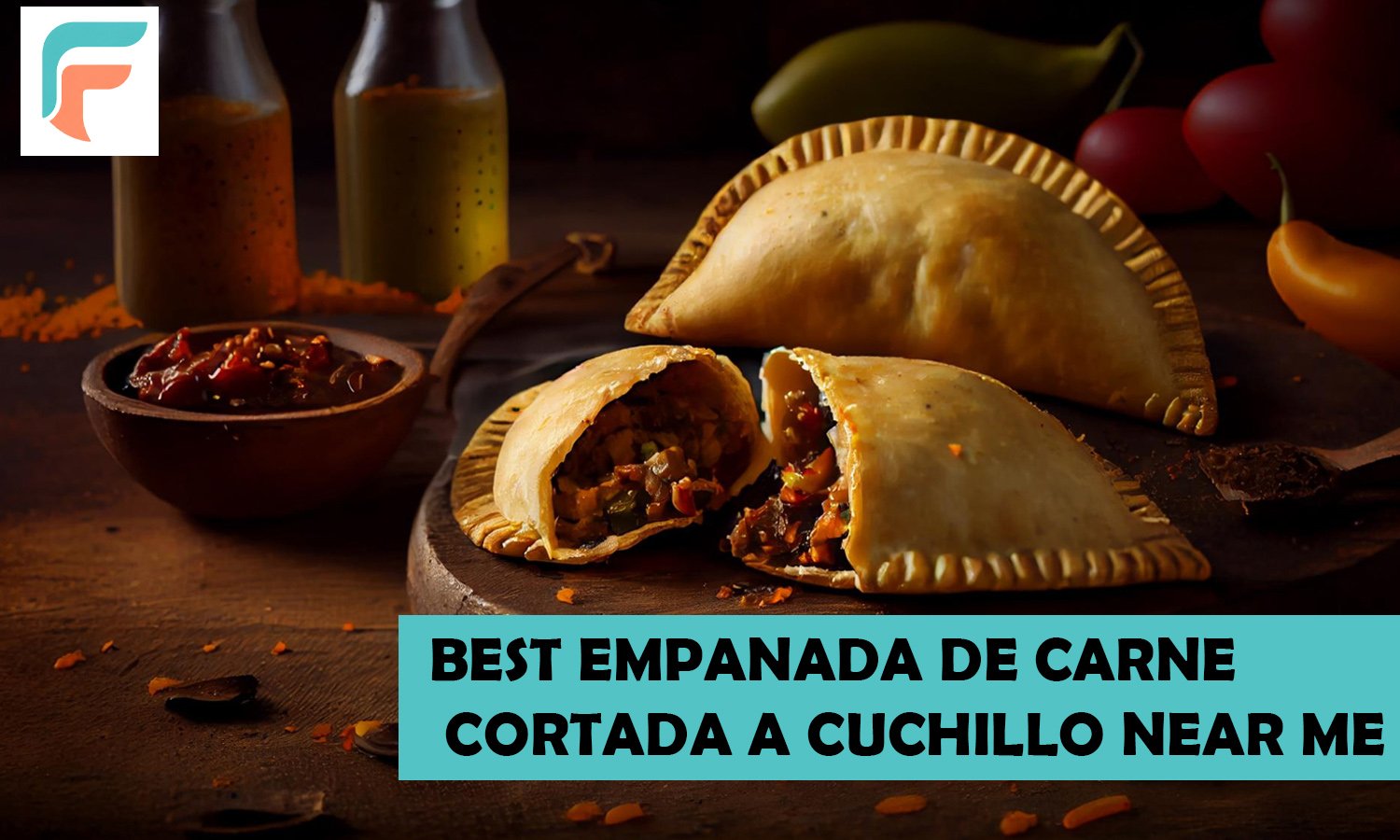
Imagine this. You bite into a warm empanada. The pastry is thin and golden. Hot juice runs down your fingers. Inside, the beef is cut into small, soft pieces that still have a little bite. This is the empanada many people hope to find when they type “best empanada de carne cortada a cuchillo near me” into Google.
The Spanish name means “beef empanada, cut with a knife.” The cook cuts the meat by hand and does not use a grinder. It takes more time, and many Argentine cooks say it gives the best texture and the juiciest filling.
In this guide, I explain what knife-cut empanadas are, where they come from, and how the main regional styles are different. Then I share seven easy tips to help you find a good one close to you. At the end, you will find ten common questions with short answers.
What does “carne cortada a cuchillo” mean?
“Carne” means meat, “cortada” means cut, and “a cuchillo” means with a knife. Put together, it means meat that was cut by hand into small pieces.
Why does this matter? Ground beef is very soft, and it can turn into a paste when it cooks. Hand-cut beef keeps its shape. You can feel the small pieces when you eat, and they hold the juices well. Cooks in Tucumán, a province in northern Argentina, are very serious about this. They say the beef for their empanadas should be cut by hand and never ground.
The cut of meat changes from place to place. In Tucumán, cooks use matambre, a thin cut of beef from the flank. In Salta, cooks use lean cuts from the back leg, such as nalga. In Patagonia, in the far south of Argentina, empanadas are often filled with lamb that is cut or shredded by hand.
Argentine food writers often say the empanada has around 500 years of history. The knife-cut style is still alive in many family kitchens and small empanada shops today.
The two famous styles: Tucumán and Salta
Most people who look for knife-cut empanadas are really looking for one of two styles. Both come from the north of Argentina, and the two provinces have argued for years about which one is the best.
Tucumán empanadas
Tucumán is often called the national capital of the empanada. Every year, in September, the city of Famaillá holds the National Empanada Festival. The first one took place in 1980, and cooks still compete to win the title of national champion.
A Tucumán champion, Cristina Rojas Lazarte, explained the traditional recipe to the newspaper La Gaceta. It uses hand-cut matambre, white onion, green onion (called cebolla de verdeo), cumin, paprika, an egg, and fat. There are usually no potatoes, peas, or olives in the filling.
Here are some details that make this style special:
- The edge of the empanada has 13 small twists. This edge is called the repulgue.
- The cooks boil the meat first and save the broth. Then they add some broth back into the filling so it stays juicy.
- The meat and the dough are often made the day before. The champion says this helps the empanada stay closed in the oven.
- In a hot clay oven, the empanadas can be ready in about five minutes.
They are so juicy that people say you should eat them leaning forward over your plate. Many people add a few drops of lemon.
Salta empanadas
Salta empanadas are usually smaller and spicier. The meat is always cut by knife, and this is a rule that Salta cooks do not break. The filling also has small cubes of boiled potato, and fresh green onion is added at the end. Cooks often bake them in a clay oven.
The traditional dough uses wheat flour, beef fat, and paprika. The filling is called recao, and it also has cumin, hot pepper, and a hard-boiled egg. Salta even has its own empanada day on April 4.
If you like to drink wine with your meal, try a glass of Torrontés. It is a white wine from Salta, and it is the traditional drink with these empanadas.
Tucumán and Salta side by side
| Tucumán | Salta | |
|---|---|---|
| Meat | Matambre, cut by hand | Lean beef, cut by hand |
| Potato | Usually not used | Yes, in small cubes |
| Size and taste | Very juicy, strong green onion flavor | Smaller, spicier |
| Edge | 13 twists | Varies |
| Oven | Clay oven or fried | Often a clay oven |
Other northern styles
Other provinces have their own twist. In Jujuy, the empanadas are tiny, and they also have potato in the filling. High in the mountains of Jujuy, some cooks use llama meat. La Rioja is famous for very juicy empanadas with small pieces of fat inside. In Catamarca, the filling can have raisins, and it often rests for at least 24 hours after cooking.
What about Chilean empanadas?
If you see “empanada de pino” on a menu, that is the Chilean style. The filling has beef and onion, plus egg, olives, and raisins. It is usually baked and a bit sweeter. It is a tasty dish, but it is a different one. Do not expect the same taste as a Tucumán or Salta empanada.
Why good empanadas take time
A good knife-cut empanada is not a fast food. The cook has to cut the meat by hand, cook it slowly, and then let it rest. Many cooks make the filling one day before and keep it in the fridge. This rest time helps the flavors mix, and the filling becomes firm enough to stay inside the dough.
So when a shop tells you the filling was made yesterday, that is a good sign. It means the cook follows the traditional way.
7 easy tips to find the best empanada near you
1. Search with the right words
Do not search with only one phrase. Try several, such as:
- empanadas tucumanas near me
- empanadas salteñas near me
- Argentine restaurant near me
- Argentine bakery near me
- empanadería near me
Open Google Maps and look at the photos and menus. Many shops do not use “cortada a cuchillo” in their name, but you will often find it inside the menu.
2. Read the menu first
Look for words like “cortada a cuchillo,” “knife-cut,” “hand-cut,” or “matambre.” If the menu says “carne molida” or “ground beef,” the shop uses a different style. It can still be tasty, but it is not the empanada you are searching for.
3. Ask one simple question
Ask the staff: “Is the beef cut by knife?” In Spanish, you can say: “¿La carne es cortada a cuchillo?” You can also ask if the filling was made the day before. People who really care about their empanadas are usually happy to talk about them.
4. Choose the style you like
Do you like spicy food and small empanadas? Try the Salta style with potato. Do you want a very juicy bite with lots of green onion? Try the Tucumán style. If you are not sure, order one of each and compare them. It is a fun way to learn what you like.
5. Look closely at the photos
Customer photos on Google Maps tell you a lot. A good empanada has thin, golden pastry and a neat, even edge. If someone shows a cut one, you should see small pieces of meat and not a smooth paste. A little juice on the plate is a good sign. Pale, dry empanadas are a warning.
6. Read reviews with a smart eye
Use the search box inside the reviews. Look for words like “juicy,” “jugosa,” “knife,” “hand-cut,” “Argentine,” “tucumana,” and “salteña.” Reviews from people who grew up eating empanadas are often the most useful. A review that only talks about parking or service will not tell you much about the meat.
7. Eat them hot and fresh
Ask when the shop bakes its empanadas. A clay oven or wood oven is a lovely sign, especially for northern styles, but it is not a must. In fact, even experts do not fully agree if real Tucumán empanadas should be baked or fried. What matters most is that you eat them warm, with the pastry still crisp. Add a little lemon to a Tucumán empanada, or pour a glass of Torrontés with a Salta one.
Can’t find one near you? Try a simple home version
If your city has no Argentine restaurant, you can make a basic version yourself. This is the idea behind a traditional Tucumán recipe, as described by the Argentine news site Ámbito:
- Simmer about 1 kg of matambre in water until it is soft. Keep the broth.
- Cut the cooked meat into small pieces with a sharp knife.
- Mix it with green onion, white onion, cumin, sweet paprika, salt, and chopped hard-boiled eggs. Add a little broth to keep it juicy.
- Rest the filling in the fridge overnight.
- Fill the dough, close the edge with small twists, and bake until golden.
If you cannot find matambre, ask a butcher for a thin, flat cut of beef, such as flank steak. Your result will not be exactly the same, but it will be close to the right idea.
Final thoughts
Finding a really good knife-cut empanada takes a little detective work, but it is worth it. Start with the right search words, check the menu and the photos, and ask a few friendly questions. Try both the Tucumán and Salta styles, and let your own taste decide which one you love most.
Next time you bite into a warm empanada and the juice runs down your hand, you will know you found a good one.
frequently asked questions
1. What does “empanada de carne cortada a cuchillo” mean?
It means a beef empanada where the meat was cut by hand with a knife into small pieces. The meat was not ground.
2. Is knife-cut beef better than ground beef?
Many cooks think so. Hand-cut beef keeps small pieces that feel nice to eat, and it holds juice well. Still, taste is personal. Some regions, like Mendoza, use hand-cut beef or good-quality ground beef.
3. What is the difference between Tucumán and Salta empanadas?
Tucumán empanadas usually have no potato, and they have a lot of green onion. Salta empanadas are smaller, spicier, and have small pieces of potato inside. Both styles use beef cut by knife.
4. Why do Tucumán empanadas have 13 twists on the edge?
The twisted edge is called the repulgue. In Tucumán, the traditional edge has 13 twists. One source says this helps cooks make every empanada the same size.
5. Are knife-cut empanadas baked or fried?
Both ways exist. Baking is more common, and the northern provinces often use a clay oven. In Tucumán and Córdoba, some cooks fry them.
6. What cut of beef is used?
It depends on the region. Tucumán uses matambre, a thin cut from the flank. Salta uses lean cuts from the back leg, such as nalga. In Patagonia, many cooks use lamb.
7. What should I drink with them?
In Salta, people traditionally drink Torrontés, a white wine. A cold drink or a squeeze of lemon on the empanada also works well, especially with the juicy Tucumán style.
8. Is an empanada de pino the same thing?
No. Empanada de pino is the Chilean style. It has beef and onion, plus egg, olives, and raisins. It tastes sweeter and different from the Argentine northern styles.
9. When is Empanada Day, and when is the big festival?
Argentina celebrates Empanada Day on April 8. Salta also has its own day on April 4. The National Empanada Festival takes place in Famaillá, Tucumán, every September. These dates are a good time to ask restaurants about special menus.
10. How can I tell if a place near me is really authentic?
Check the menu for “cortada a cuchillo” or “matambre.” Look at customer photos for thin, golden pastry and juicy filling. Read reviews for words like “hand-cut” and “juicy.” Finally, ask the staff how they make the filling. A real empanada maker will be proud to tell you.