

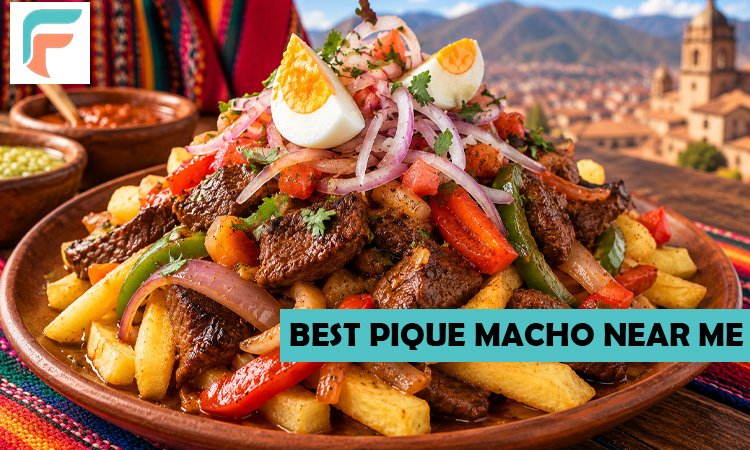
You typed “best pique macho near me” into Google, and now you want a big, tasty plate of food. Good choice. Pique macho is one of the most fun dishes in Latin American food. It is loud, it is heavy, and it is made to be shared with friends.
But finding a good one can be hard. Some places make a real Bolivian plate. Others just throw some fries, meat and sauce on a dish and give it a fancy name. In this guide, I will show you what pique macho really is, what a good plate looks like, and how to find a great one close to you. I will also answer the ten questions people ask most.
What Is Pique Macho?
Pique macho (also written “pique a lo macho”) is a typical dish from Bolivia. It is a very big plate of food. The base is fried potatoes, cut like french fries. On top you get pieces of beef, sliced sausage, onions, tomato and peppers. Boiled egg slices go on the top, and the plate comes with sauces like ketchup, mayonnaise and mustard.
The special touch is the hot pepper. In Bolivia, many cooks use a pepper called locoto. It gives the dish its heat. Some cooks also add a hot sauce on the side, so each person can choose how spicy they want it.
Think of it as a mix between a steak and fries dinner and a party platter. It is not a small meal. Most plates are made for two or more people.
Where Does Pique Macho Come From?
The dish comes from Cochabamba, a city in the middle of Bolivia. Cochabamba is well known in the country for its food. People there say that pique macho began in a small restaurant, and a married couple who ran it are often named as the creators. After it became popular, it spread to other big Bolivian cities and then around the world.
There is a fun story about the name. In Bolivia, the word “pique” can mean something spicy. “Macho” means a strong man. One story says a woman told a guest to eat the spicy plate “if you are man enough.” Another story says you are “macho” if you can finish a whole plate by yourself. Most people do not try this. They share the plate.
Today, pique macho is a symbol of Bolivian food culture. People eat it at family meals, parties and special days. It is a dish for being together.
What Is on a Real Pique Macho Plate?
Recipes change a little from cook to cook, but most real plates have these things:
- French fry-style potatoes: They sit at the bottom and soak up the juices and sauces.
- Beef: Usually small pieces of steak or other tender cuts.
- Sausage: Often sliced sausage or hot dog pieces. Some cooks use chorizo.
- Onion, tomato and peppers: They add fresh taste and a bit of crunch.
- Locoto or other hot pepper: This gives the heat.
- Boiled eggs: Sliced or cut in pieces and placed on top.
- Sauces: Ketchup, mayonnaise and mustard are common. Many places also serve a hot sauce such as llajua, which is made with tomato and pepper.
Some restaurants add cheese or other toppings. That is fine, but the base should still be potatoes, meat, sausage, egg and a spicy kick.
One home recipe site lists about 800 calories for one serving, and the number can change with the oil, the potatoes and the sausage. So this is a heavy meal. Plan your day around it.
How to Find the Best Pique Macho Near You
Now for the main question. Here are simple steps that work in almost any city.
1. Search with more than one phrase
“Pique macho near me” is a good start, but try other words too. Search for “Bolivian restaurant near me”, “Bolivian food near me” and “pique a lo macho”. Some places spell the name in different ways, so you may find new results.
2. Use the map and read the photos
On Google Maps, look at the photos that customers took, not only the photos from the restaurant. A good plate looks full. You should see a lot of potatoes, many meat pieces, and egg on top. If the plate looks small or the fries look very pale, keep looking.
3. Read reviews with care
Do not only look at the star rating. Search inside the reviews for the words “pique” or “macho”. Read what people say about the meat, the portion size and the heat. Reviews from people who say they are from Bolivia, or who have eaten the dish before, are very helpful.
4. Check the menu online
Many restaurants post their menu on their website or social media. See if pique macho is a main dish or just a small side. A place that lists it clearly and describes the ingredients is usually a good sign.
5. Call before you go
This is an old tip, but it works. Some restaurants only make pique macho on certain days, or you need to order early. A quick call can save you a trip. You can also ask how many people one plate can feed.
What Makes a Good Pique Macho?
When you get your plate, here is what to look for.
The potatoes should be fried well. Good fries are golden and a little crispy on the outside, and soft inside. Of course, they will get softer under the sauce, but they should not be raw or very oily.
The meat should be tender. Beef that is dry and hard is a bad sign. The pieces should be small and juicy, and they should have flavor on their own.
The balance matters. A strong meat to fries ratio is important. If the plate is only fries with a few small pieces of meat, you are not getting a real pique macho.
The heat should be there, but not too much. A good place lets you control the spice. If the dish comes with a hot sauce on the side, that is a great sign.
The plate should be fresh. Onions, tomatoes and peppers should look fresh. The eggs should be soft and not dry or gray.
Where to Look for Pique Macho
Bolivian restaurants
This is the best place to start. A Bolivian restaurant usually knows how to make the dish the right way, with the right seasoning and the right sauces. The cooks have often grown up with the dish.
Latin American restaurants
Some Latin American restaurants have pique macho on the menu, even if they are not Bolivian. These can be good, but the recipe may be different. It is smart to ask the staff how they make it.
Pop-ups and food trucks
Sometimes a Bolivian cook starts a small pop-up inside a bar or café. News sites in some cities have written about this kind of pop-up. Follow local food pages on social media to find them.
Food markets and festivals
Cultural events and food festivals often have Bolivian stands. These are great for trying a smaller portion before you order a big plate.
Fusion restaurants
Some modern places make their own version. It may have different meat, extra cheese or a new sauce. These can be tasty, but they are not the classic plate. Try them after you have had the real thing.
Questions to Ask the Staff
If you are not sure about a restaurant, ask these simple questions:
- Is the pique macho made with beef and sausage?
- How many people does one plate feed?
- Is it spicy? Can I get the hot sauce on the side?
- Do you make the fries fresh?
- Do you have a smaller size or a version without meat?
The way the staff answers will tell you a lot. If they speak with pride about the dish, you are likely in a good place.
Versions You May See
Pique macho has a few well-known versions:
- Vegetarian pique macho: It is made without meat. You get the potatoes, the vegetables, the egg and the sauces.
- Extra spicy pique macho: The cook adds more locoto or chili.
- Meat-heavy pique macho: This version has more beef on the plate.
- Home-style pique macho: Families often make their own version with what they have in the kitchen.
If you do not eat meat, call the restaurant first. Ask if they can make a version without beef and sausage.
What to Drink and Eat with It
Pique macho is rich and salty, so you want something cold to go with it. Good choices are:
- Lemonade
- Fruit juice
- Soda
- Beer, if you drink alcohol
- Bolivian soft drinks, if the restaurant has them
A simple salad can also help. Fresh tomato and onion are a nice break from the heavy food. Rice is not common on the plate, but some people like to add it on the side.
Do not plan a big meal after this. Many people feel full and sleepy after a plate of pique macho.
Tips for First-Time Eaters
- Come hungry, and bring friends. This plate is made for sharing. Two or three people is a good number.
- Start slowly with the spice. Try a small bite with the hot sauce first. You can always add more.
- Mix a little of everything in each bite. The fries, the meat, the egg and the sauce taste best together.
- Eat it fresh. The fries get soft the longer the plate sits.
- Go at lunch if you can. The restaurant is often quieter, and the kitchen may have more time to cook your plate with care.
Can’t Find One Near You? Make It at Home
Sometimes there is no Bolivian restaurant in your city. Then you can try to make pique macho at home. It is not hard. You need potatoes, beef, sausage, onion, tomato, pepper, eggs and your favorite sauces. Fry the potatoes, cook the meat and sausage with the onion and tomato, and put everything on a big plate. Add the egg on top and serve with ketchup, mayonnaise, mustard and hot sauce.
Many food blogs share full recipes with steps, and a few of them are listed in the sources below. Use a recipe from a cook who knows Bolivian food well. Then you can compare your plate with the ones in restaurants.
Final Thoughts
The best pique macho near you is not always the place with the most stars. It is the place that makes a full, fresh, tasty plate with real care. Look for a restaurant that knows the dish, check the photos and reviews, call before you go, and bring friends to share.
Pique macho is more than a meal. It is a way to spend time with the people you like. So find a place, grab a seat and enjoy a big plate of Bolivian comfort food.
Frequently Asked Questions (FAQ)
1. What does “pique macho” mean?
“Pique” is a word that can mean something spicy in Bolivia, and “macho” means a strong man. Together, the name suggests a spicy dish for people who are brave. It is also a bit of a joke, because many people share one plate.
2. Is pique macho very spicy?
It depends on the cook. The heat usually comes from locoto or other chili. Many restaurants keep the plate medium and serve a hot sauce on the side, so you can add more if you like.
3. What is pique macho made of?
A classic plate has fried potatoes, beef, sausage, onion, tomato, peppers, boiled egg and sauces such as ketchup, mayonnaise and mustard.
4. Where is pique macho from?
It is from Cochabamba, a city in Bolivia. From there it spread across the country and to Bolivian restaurants in other parts of the world.
5. How many people can eat one plate?
Most plates are big enough for two or more people. Some restaurants offer a small size. Ask the staff when you order.
6. How many calories are in pique macho?
It changes from recipe to recipe. One home recipe lists about 800 calories for a single serving. Restaurant plates can be bigger, so the total can be much higher if you eat a lot.
7. Can I find a vegetarian pique macho?
Yes, some cooks make a vegetarian version without meat. It is not on every menu, so call the restaurant and ask first.
8. What sauce goes with pique macho?
Ketchup, mayonnaise and mustard are the usual sauces. Many places also serve a hot sauce, such as llajua, which is made from tomato and pepper.
9. What should I drink with pique macho?
Cold drinks work best. Lemonade, soda, fruit juice and beer are common choices because they help with the heat and the rich food.
10. How do I know if a restaurant makes a good pique macho?
Look at customer photos, read reviews that talk about the dish, and check if the plate has plenty of beef, sausage, fries and egg. A hot sauce on the side and staff who can explain the dish are also good signs.