

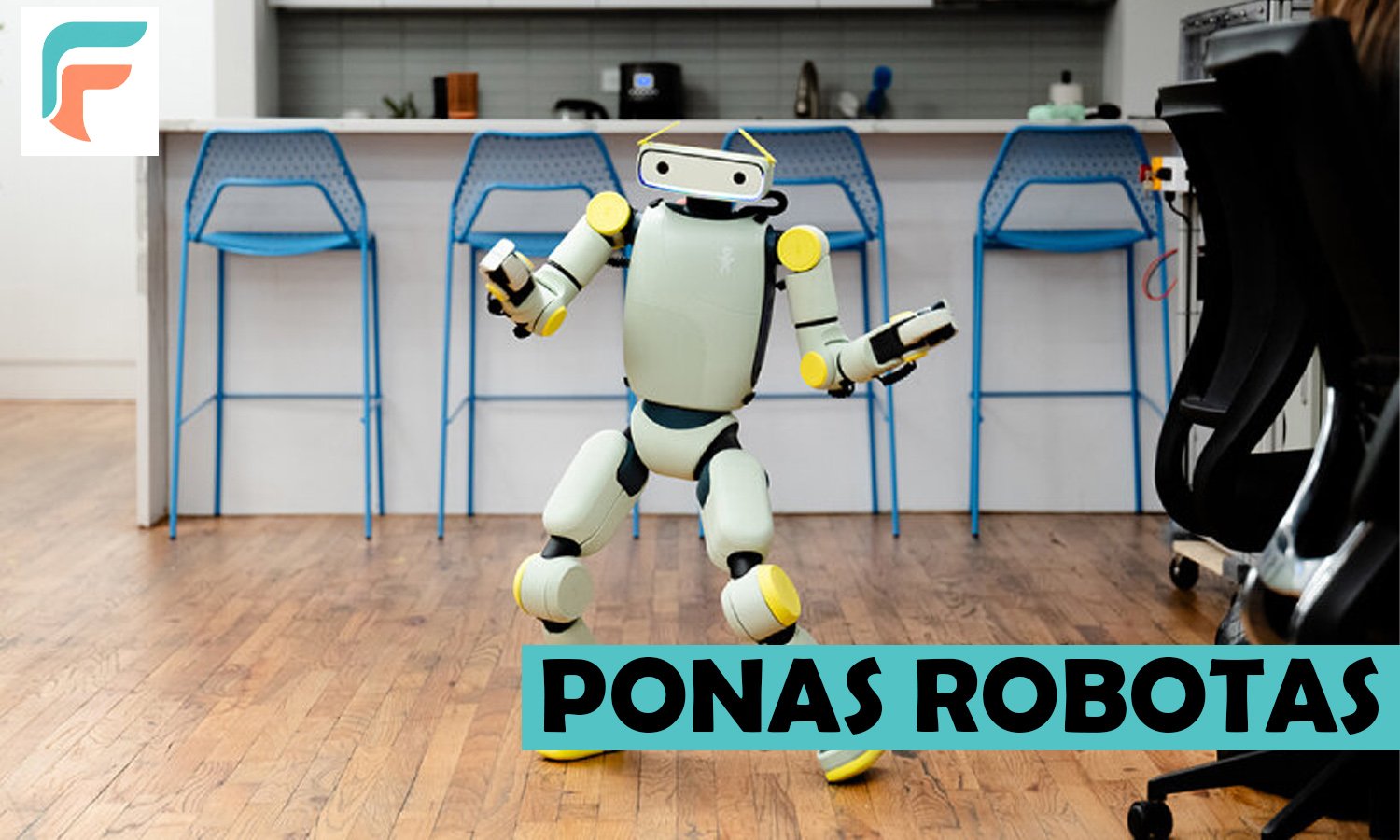
Have you seen the words “Ponas Robotas” online and wondered what they mean? You are not alone. Many people type this name into Google every day. Some pages say it is a new smart robot. Others say it is an AI platform that beats every other system. But when you look closer, the story is not so clear.
Quick Answer: What Is Ponas Robotas?
“Ponas Robotas” is a Lithuanian phrase. It is close to “Mr. Robot” or “Sir Robot” in English. It is not a famous robot brand, and I could not find an official company or product with this name.
Here are the short facts:
- Ponas is a polite word for a man in Lithuanian. It is like “Mr.” or “sir.”
- Robotas is the Lithuanian word for “robot.”
- Many websites use the name as if it were a new AI robot, but most of these pages look copied and give no proof.
- Real Lithuanian robot projects do exist, but they use other names.
What Does “Ponas Robotas” Mean?
Let us break the phrase into two parts.
The word “ponas”
In Lithuanian, “ponas” is a title of respect. You can put it before a name, like “Ponas Jonas,” which is similar to “Mr. Jonas.” You can also use it alone when you talk to a man politely, a bit like “sir.”
The word has an interesting past. A dictionary page says Lithuanian took it from the Polish word “pan.” A long time ago, this kind of word meant “lord” or “master.” Over time, it became a normal, polite way to talk to someone. In modern Polish and Lithuanian, these words work both as common nouns and as polite forms of address.
So when you see “Ponas” in front of a word, think “Mr.” and you will be close to the right meaning.
The word “robotas”
“Robotas” is simply the Lithuanian form of “robot.” Lithuanian adds the ending “-as” to many male nouns, so “robot” becomes “robotas.” Many languages changed the word in a similar way.
Putting it together
When you join the two words, you get “Mr. Robot.” It sounds like a name you might give to a friendly robot character in a story or a game. It does not point to one special machine in the real world.
Where Does the Word “Robot” Come From?
The story of the word “robot” helps us understand why the name sounds so interesting.
The word comes from a Czech play called R.U.R., which stands for Rossum’s Universal Robots. The writer was Karel Čapek, and the play came out around 1920 and 1921. Before this play, people often used words like “automaton” or “android” for machines that looked like people. After the play became famous, the word “robot” spread to many languages. It was translated into more than 30 languages within a few years.
Here is a fun fact. Karel Čapek said his brother Josef, who was an artist, was the real inventor of the word. At first, Karel thought about calling the made-up workers “labori,” but he felt that sounded too much like a book word. Josef suggested “roboti.”
The Czech word “robota” means forced work, the kind of hard labor that serfs had to do for their masters. It comes from an old root, “rab,” which means “slave.” So the first robots in the play were not shiny metal machines. They were made workers who were treated badly. The play was a warning about how machines and factory work can make people lose their humanity.
Now look at our phrase again. “Ponas” once meant “lord” or “master,” and “robot” comes from a word for forced work. It is a funny pair of words, even if it is only a coincidence.
Why Are People Searching for Ponas Robotas?
There are a few reasons why this phrase gets searches.
1. Articles with big promises
If you search the name, you will find articles with strong titles. One says a robot “crushes all expectations.” Another says it “outsmarts the strongest AI systems.” A third says it is “rewriting the future.”
These titles sound exciting, so people click on them. But when you read the text, you find very few facts. There is no company name, no date of release, no test result, and no photo from a real event. The texts use general words like “smart,” “adaptive,” and “human-friendly,” but they never show how the robot works.
2. The same text on many different sites
Here is something strange. The same article appears on many websites that have nothing to do with robots. When I searched, the same text showed up on sites for a dog club, a school, and several business pages. Normal news about a real product does not spread like this. It is a sign that the text was copied or made by a program to attract visitors.
3. Spelling changes
The articles also change the name from one place to another. You can find “Ponas Robotas,” “Ponasa Robotas,” “Ponasas Robotas,” and even “Ponatas Robotas.” A real product has one clear name. When the name changes inside the same article, the writer usually does not have a real product in mind.
4. Real curiosity about Lithuanian
Some people just find the phrase interesting. It looks and sounds unusual in English, so they want to know what it means. That is a good reason to search, and it is one reason why we wrote this guide.
Is Ponas Robotas a Real Product?
Based on what I could find, there is no sign of an official robot, app, or company called Ponas Robotas. I did not find a product page, a founder, a press release, or a trusted news report.
One technology website does write about the phrase. It describes it as an idea about robots that work together with people to save time, raise productivity, and make life easier. This is a general idea about the future of robots, and it does not describe one real machine.
So the safe answer is this: treat Ponas Robotas as a phrase, not as a proven product. If you see a page that says you can buy it or invest in it, be careful.
What Is Real: A Lithuanian Speaking Robot for a Museum
Even though Ponas Robotas is not a known product, there is real and exciting robot news from Lithuania. The Lithuanian National Museum is working on a humanoid robot that speaks Lithuanian.
Here is what the museum says about the project:
- The robot will be about the size of a person.
- It will have many small motors, called servo motors, that move the eyes, neck, arms, and fingers.
- It will have cameras, microphones, and face recognition, so it can see visitors, greet them, and talk to them.
- You will be able to control it with Lithuanian voice commands.
- It will understand hundreds of Lithuanian words, move, answer questions, and explain technology and science topics.
- It will be part of an exhibition about the history of high technology in Lithuania.
The museum also asked the public for help through a crowdfunding page. The goal was 8,000 euros, and the deadline was August 1, 2026. When I checked the page, only a small part of that money had been collected.
In April 2026, the museum also shared an interview with the scientist behind the project, Linas Aidokas. He explained that the hardest part is the Lithuanian language itself. Lithuanian has many sounds and small meaning changes. Word stress is very important, and a small change can give a word a new meaning. A robot must understand these details, because a wrong guess could hurt or confuse someone.
To teach the robot, the team uses a long project that trains artificial intelligence with Lithuanian content from sources like television, radio, media, and phone calls.
This is a real example of a Lithuanian robot. If you are looking for a true story that is close to “Ponas Robotas,” this is a much better one.
Robotics in Lithuania: A Short Look
Lithuania is a small country, but it has a growing robotics and automation field. Here are a few facts from official and industry sources.
- A young but active field. A newsletter from the Lithuanian Robotics Association says the field is young compared to the rest of the world, but it is ambitious. The group says robotics, artificial intelligence, and photonics are priority areas for the country’s industry.
- More companies use robots. Statistics Lithuania found that the share of Lithuanian companies using robots grew from 3.2 percent to 4.6 percent in two years. That was still a low number, which shows there was room to grow. Business leaders said the demand was rising, but some industries, like food production, needed more time to accept robots.
- Local companies. Some Lithuanian firms build or install robots for factories. Examples include Elinta Robotics, which works on computer vision and factory automation, and Factobotics, which makes standard robot solutions for the metal industry. Nord Robotics, from Šiauliai, started in 2016 and installs and repairs robot systems. Robotex, from Kaunas, started in 2009 and helped to start the Lithuanian Robotics Association in 2016.
- Interest from abroad. In 2022, a Lithuanian deputy minister said that 67 foreign-owned companies were already using robots in factories in the country, and 98 more planned to invest in robotics. He also said the city of Panevėžys wanted to become a robotics hub. The same year, the government invited the Japanese robot maker Fanuc to invest, and Fanuc already worked with Lithuanian companies.
These facts show that Lithuania has real robot companies, real projects, and real plans. None of them use the name “Ponas Robotas,” but they are the true story behind Lithuanian robots.
How to Check a Robot Story Online
The Ponas Robotas case teaches us a useful lesson. Many online stories about “new robots” and “new AI” are weak. Here are simple steps you can use to check a story before you believe it.
- Look for a real company name. A true product has a maker. If the article never names the company, be careful.
- Check for a date and a place. Real launches happen at events, in labs, or in shops. Look for details you can check.
- Search for more than one source. If only copy-paste pages talk about it, that is a bad sign. Look for news sites, universities, or official pages.
- Look at the spelling. If the name changes inside one article, the writer may not know the topic.
- Watch out for big claims without proof. Words like “beats all AI” need test results, not just strong titles.
- Search the same text. Copy one sentence into Google. If you see it on many unrelated sites, the text was probably copied.
- Do not pay or share personal data. If a page asks for money or information for a robot you cannot verify, leave it.
What to Remember
- “Ponas Robotas” means “Mr. Robot” in Lithuanian.
- “Ponas” is a polite title that came from the Polish word “pan.” “Robotas” is the Lithuanian form of “robot.”
- The word “robot” comes from a Czech play from the early 1920s and from a word that means forced work.
- I could not find a real product or company with this name. Many pages about it look copied and give no proof.
- Real Lithuanian robot news does exist, like the Lithuanian speaking humanoid robot for a museum and the country’s growing robotics companies.
Curiosity about unusual words is a great way to learn. This phrase may not point to a famous robot, but it teaches us about languages, history, and how to read online stories with care.
Frequently Asked Questions
1. What does Ponas Robotas mean?
It means “Mr. Robot” or “Sir Robot” in Lithuanian. “Ponas” is a polite title for a man, and “robotas” is the Lithuanian word for robot.
2. Is Ponas Robotas a real robot?
I could not find proof of a real robot with this name. There is no official product page, company, or trusted news report about it. Some websites write about it, but they give very few facts.
3. Is Ponas Robotas a company or a brand?
I did not find any company or brand with this name. If you see a site that claims to sell it, check the facts first and avoid sharing money or personal data.
4. Why do I see names like Ponasa Robotas or Ponasas Robotas?
These are spelling changes that appear in copied or auto-made articles. A real product usually has one clear name. When the name changes in the same text, it is often a sign that the writer did not have a real product in mind.
5. Where does the word “robot” come from?
It comes from the Czech word “robota,” which means forced work. Karel Čapek used the word in his play R.U.R. in the early 1920s, and he said his brother Josef gave him the idea.
6. Does Lithuania really have robots?
Yes. Lithuania has companies that build, install, and repair robots, such as Elinta Robotics, Factobotics, Nord Robotics, and Robotex. The country also has a robotics association and plans to grow this field.
7. Is there a robot that speaks Lithuanian?
Yes, one is in the works. The Lithuanian National Museum is building a humanoid robot that will understand Lithuanian voice commands and explain science and technology to visitors.
8. How can I tell if a robot news story is true?
Look for the company name, the date, and the place. Check if news sites or official pages also report it. Be careful with big claims that come with no proof, and search a sentence from the article to see if it was copied.
9. Is “ponas” the same as “Mr.” in English?
It is very close. Lithuanians use “ponas” before a name, like “Mr.,” and alone when they speak politely to a man, like “sir.” Long ago, the word meant “lord” or “master.”
10. Should I trust articles that say Ponas Robotas is better than other AI systems?
No, not without proof. A real claim needs test results, a named maker, and a way to check the facts. If an article only uses exciting words and shows no evidence, it is better to look for another source.