

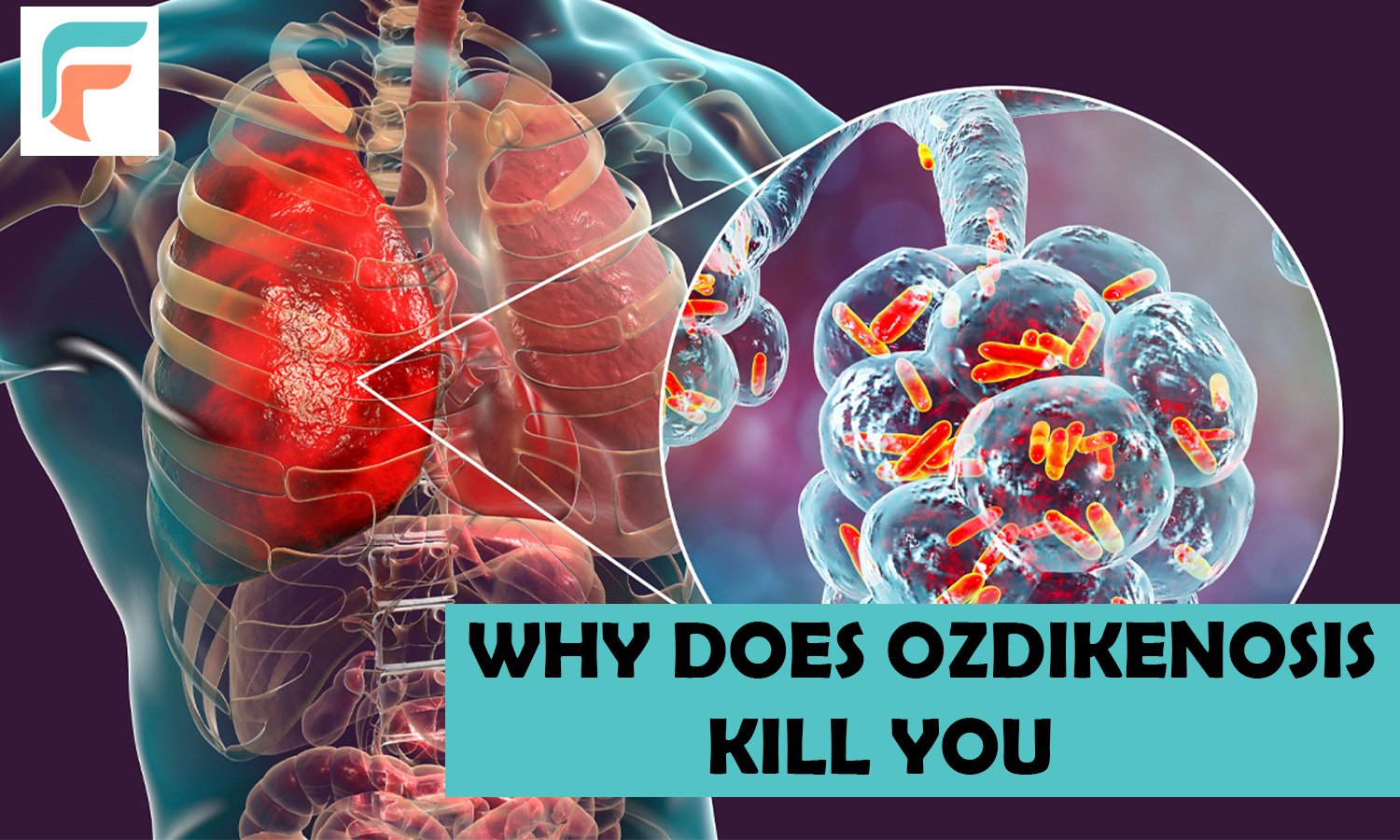
Why does ozdikenosis kill you is a question many people type into Google, but the word “ozdikenosis” does not appear in any medical source I could find. It may be a spelling mistake, a mixed-up name, or a word someone made up. The good news is that the search results point to two real conditions that people often mean in this kind of search: Ogilvie syndrome and fecal impaction. Both affect the bowel, and both can become life-threatening if nobody treats them in time. In this guide, you will learn what these conditions are, why they can be dangerous, who is at risk, and when to ask for help.
Is Ozdikenosis a Real Disease?
No, ozdikenosis is not a recognized disease name in the medical sources I checked. A search for the exact word brings up no clinic page, no research paper, and no health agency page that uses it. That does not mean your worry is silly. It only means the word is probably wrong or very rare.
When a word does not exist in medical books, the next step is to look at the closest matches. The results for this search were about a swollen colon with no blockage (Ogilvie syndrome) and about hard stool that gets stuck in the bowel (fecal impaction). If you heard the word from a doctor, a nurse, or a family member, ask them to write it down. A short question can save a lot of stress.
Please do not diagnose yourself from a search result. If you or someone you love has strong belly symptoms, talk to a doctor.
What Is Ogilvie Syndrome?
Ogilvie syndrome is a condition where the colon swells and slows down even though nothing is blocking it. Doctors also call it acute colonic pseudo-obstruction. The word “pseudo” means “false,” so it is a false blockage. The colon is the large intestine, the long tube where your body makes stool.
The name comes from Sir William Heneage Ogilvie, a doctor who described the problem in 1948. In a normal bowel, muscles push food and waste forward in waves. In Ogilvie syndrome, this movement stops working well. Gas and fluid build up, and the colon stretches. One medical case report describes the colon as wider than 10 centimeters, which is far larger than normal.
The tricky part is that it looks like a real blockage. The National Organization for Rare Disorders (NORD) says the signs are almost the same as a true mechanical blockage, so doctors need scans to tell the two apart.
What Causes Ogilvie Syndrome?
Doctors do not know the exact cause of Ogilvie syndrome. NORD says it most likely comes from a problem with the nerves that control how the colon moves. These are part of the autonomic nervous system, the system that runs body tasks you do not think about, like digestion.
The condition usually shows up in people who are already sick. NORD notes that it often develops in people in a hospital or a care home after a serious illness or an operation. Other medical sources link it to several triggers:
- Infection in the body
- Low or unbalanced salts in the blood (electrolyte problems)
- Some medicines
- Nerve or brain diseases, such as Parkinson’s disease
- Heart failure and breathing problems
- Surgery and injury
Many of these triggers can happen together. That is one reason the condition can be hard to spot.
What Are the Symptoms of Ogilvie Syndrome?
The most common sign is a swollen belly. NORD lists belly swelling, bloating, belly pain, nausea, and vomiting as the common symptoms. A case report from a patient with Ogilvie syndrome also lists constipation and diarrhea. Some people pass gas and stool, and others do not.
These signs look like many other stomach problems, so they do not prove a person has Ogilvie syndrome. That is why a doctor must check the belly, look at X-ray or CT images, and sometimes use a camera test called a colonoscopy to rule out other causes.
Why Can Ogilvie Syndrome Kill You?
Ogilvie syndrome can kill you when the swollen colon loses blood flow or tears open. A Turkish medical report explains that ischemia (low blood supply) and perforation (a hole in the wall) are the feared problems. Here is how it can happen, step by step:
- Gas and fluid stretch the colon wall.
- The stretched wall gets thin, and blood has trouble reaching it.
- Parts of the wall can die from lack of blood.
- The wall can tear, often in the first part of the colon, called the cecum.
- Stool and germs spill into the belly and cause a severe infection called sepsis.
A medical review from Romania says that without treatment, the colon can burst at the cecum. A big swollen belly can also push up on the diaphragm, the muscle you use to breathe. A forensic case reported at the American Academy of Forensic Sciences described a 19-year-old man with cerebral palsy and autism. He had a very swollen belly and trouble breathing, and then his heart stopped. The doctors who wrote the report linked the death to Ogilvie syndrome and the breathing problem it caused.
There is hope, though. NORD says Ogilvie syndrome can be managed with careful treatment, and the danger mostly comes when nobody notices it or treats it.
What Is Fecal Impaction and Why Is It Dangerous?
Fecal impaction is a large mass of hard stool that gets stuck in the bowel and cannot come out by itself. Mayo Clinic says it often happens in people who have been constipated for a long time. At first, it can feel like normal constipation. Later, the stuck stool can press on the bowel wall.
A medical article for patients explains that this pressure can block blood flow and cause the tissue to die. It can also cause stercoral colitis (swelling of the colon wall from hard stool), a tear in the bowel, and sepsis. These outcomes are uncommon when the problem is treated early.
A large review in the journal BMC Geriatrics looked at 188 published papers with 280 cases of problems caused by fecal impaction. Death was reported in 78 cases, which is about 28 percent. The risk was higher for people with long-term kidney failure (43 percent) and for people with brain or mental health conditions (30 percent).
Please read those numbers with care. Case reports usually describe the most serious cases, so they do not show the risk for the average person. A 2023 study in the journal Cureus found that for adults with fecal impaction or stercoral colitis, the chance of death or hospice care was 2.9 percent between ages 18 and 49. It rose with each decade of age and reached 21.9 percent for people aged 90 and older.
Who Is at Higher Risk?
Older adults, people with nerve or brain conditions, and people who are in a hospital or care home face the highest risk. Other risk factors include recent surgery, kidney failure, long-term constipation, and medicines that slow the bowel.
A case published in Forensic Science, Medicine and Pathology shows how serious this can be. A 59-year-old man with cerebral palsy and a curved spine died in a group home. He had not had a bowel movement for weeks. At autopsy, doctors found a hard mass of stool weighing about 2.5 kilograms. The mass pushed against the diaphragm, and together with his other health problems it led to breathing failure.
People who cannot speak for themselves, such as people with severe disability, are especially at risk. A caregiver may be the only person who notices that something is wrong.
What Warning Signs Should You Never Ignore?
Go to a doctor or an emergency room if you notice a fast-growing swollen belly, strong belly pain, repeated vomiting, or no gas and no stool for a long time. Doctors usually treat these signs as an emergency, especially if they come with any of these:
- Fever or chills
- A fast heartbeat
- Trouble breathing
- Confusion or unusual sleepiness
- A belly that is hard and very painful to touch
Do not wait to see if it passes. Treatment works best when it starts early.
How Do Doctors Treat These Conditions?
For Ogilvie syndrome, doctors first look for the cause and treat it. That can mean treating an infection, fixing blood salt levels, or stopping medicines that slow the bowel. They also follow the size of the colon with scans. A case report notes that doctors chose not to start the medicine neostigmine because the colon was not wider than 12 centimeters. This tells us size matters when they decide on treatment.
If the colon is very large or does not improve, doctors may give neostigmine, a medicine that helps the bowel muscles move. They may also use a colonoscopy to let out gas. In one Romanian case, the colonoscopy did not work, and the patient needed an operation called a cecostomy to release the pressure.
For fecal impaction, a health professional removes the hard stool and treats any damage. In the BMC Geriatrics review, emergency surgery was needed in about 79 percent of cases where the bowel wall was damaged. That is another reason early care is better.
How Can You Lower Your Risk?
You can lower your risk of fecal impaction with simple daily habits. Mayo Clinic says that more fiber, exercise, and laxatives used the right way may help prevent it. Here are easy steps to follow:
- Eat fiber from fruit, vegetables, beans, and whole grains.
- Drink enough water during the day.
- Move your body every day, even a short walk.
- Do not ignore constipation that lasts for many days.
- Ask your doctor or pharmacist if your medicines can slow the bowel.
- Talk to a doctor before using laxatives for a long time.
If you care for an older person or someone with a disability, keep a simple record of bowel movements. After surgery, ask the care team how they watch the bowel. Small checks can catch a problem before it grows.
Conclusion
Ozdikenosis is not a known medical word, so no source can say why it kills. The closest real conditions are Ogilvie syndrome and fecal impaction. Both can be deadly when the bowel loses blood flow, tears, or causes a serious infection, but early care helps a lot. If you have strong or fast-growing belly symptoms, do not wait. Call a doctor or go to the emergency room. This article is for learning only and does not replace medical advice.
Frequently Asked Questions
1. Is ozdikenosis a real disease?
No. I could not find ozdikenosis in medical sources, so it is not a known disease name. It may be a spelling mistake or a made-up word. If you saw it somewhere, check the spelling and ask a doctor what the writer meant. Do not use the word to diagnose yourself.
2. What is Ogilvie syndrome in simple words?
Ogilvie syndrome is a problem where the large intestine swells and slows down, but nothing is blocking it. Doctors also call it acute colonic pseudo-obstruction. It looks like a real blockage, so tests are needed to tell the difference. It most often appears in people who are sick or recovering from surgery.
3. Can Ogilvie syndrome kill you?
Yes, it can, but only when it is missed or treated too late. The colon can stretch so much that it loses blood flow or tears. That can cause a serious infection in the belly. With early care, many people are treated without surgery, so fast medical help matters a lot.
4. What is fecal impaction?
Fecal impaction is a large, hard mass of stool that gets stuck in the bowel and cannot come out on its own. It often happens after long-term constipation. It can feel like normal constipation at first, but it can grow worse and may need a doctor to remove the stool.
5. Can constipation kill you?
Rarely, but yes, in severe cases. Normal constipation is usually not dangerous. The risk comes when hard stool stays stuck and causes bowel damage, a tear, or infection. Older adults and people with other health problems face a higher risk. If constipation lasts long or hurts a lot, see a doctor.
6. What are the first signs of a swollen colon?
The most common sign is a swollen, tight belly. Many people also have bloating, belly pain, nausea, vomiting, and constipation. Some have diarrhea. These signs look like many other stomach problems, so they do not prove anything alone. If they get worse fast, go to a doctor or emergency room.
7. Who is most at risk?
Older adults, people in hospitals or care homes, and people who just had surgery face a higher risk. So do people with nerve or brain conditions, such as cerebral palsy, and people with kidney failure. Long-term constipation and some medicines also add risk. Caregivers should watch bowel habits closely for people who cannot speak up.
8. How do doctors treat Ogilvie syndrome?
Doctors first look for the cause, such as infection, low salts in the blood, or certain medicines, and treat it. They watch the size of the colon with scans. If the colon is very large, they may use a medicine called neostigmine or remove gas with a colonoscopy. Surgery is needed if these steps fail or the bowel tears.
9. Can you prevent these problems?
You cannot prevent every case, but you can lower the risk. Eat more fiber and stay active, which Mayo Clinic says may help prevent impaction. Drink enough water too. Do not ignore constipation that lasts many days. Ask your doctor if your medicines can slow the bowel.
10. When should I go to the emergency room?
Go right away if your belly swells fast, the pain is strong, you vomit again and again, or you cannot pass gas or stool. Fever, a fast heartbeat, confusion, or trouble breathing are also warning signs. Do not wait at home. This article is for learning only and does not replace a doctor’s advice.